Air Conditioners Review
Carrier CAI18EE5R36W0 1.5 Ton 5-Star Flexicool AC Review
Our verdict
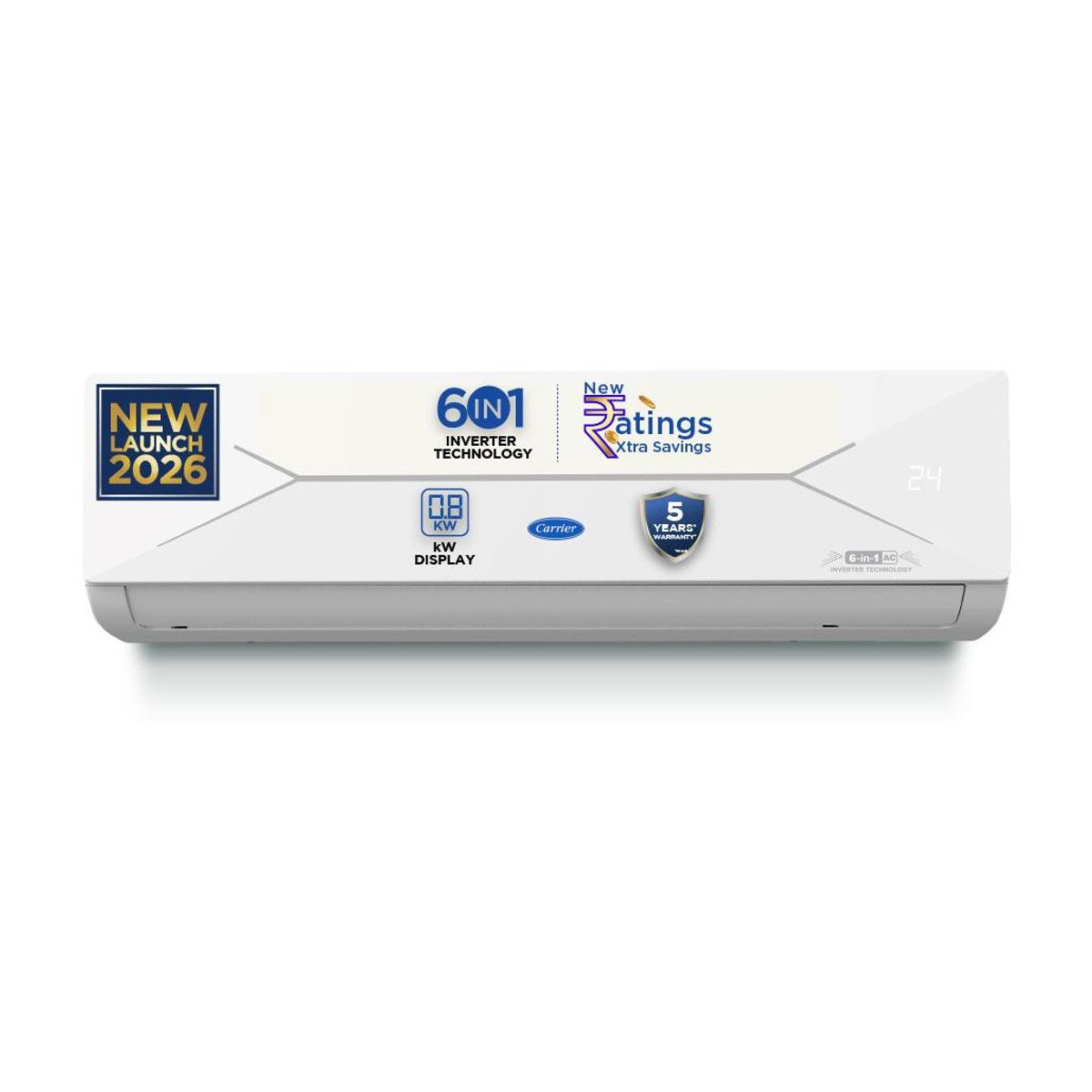
The Carrier CAI18EE5R36W0 is a 1.5 ton 5-star inverter split AC with the strongest feature list for its price, low running cost and a 52 °C rating, held back only by a smaller service network.
Buy it if
- Buyers who want the most features and low bills for the price
- Rooms of 120 to 160 sq ft in hot, dusty cities
- Smart-home users who like geo-fencing and a leak detector
Skip it if
- You live in a small town with no Carrier technician nearby
- You want the quietest indoor unit
What we like
- Annual consumption listed at about 663 units, with ISEER 5.60
- Wi-Fi with geo-fencing, an energy display and a refrigerant leak detector
- PM 2.5 and HD dual filtration
- 52 °C rated, held 24 °C at 45 °C outdoors
- Priced below LG and Daikin
What we don’t
- Service network is smaller than LG or Voltas
- Indoor unit is a few dB louder than LG on low
- App is functional rather than polished
Score breakdown
- Performance
- 8.3
- Build quality
- 7.9
- Noise
- 8.0
- Ease of use
- 8.1
- Features
- 9.0
- Value for money
- 8.8
- Energy efficiency
- 8.9
- After-sales service
- 6.9
The Carrier CAI18EE5R36W0 suits a buyer who wants the most features and the lowest running cost for the money. It cools a bedroom of 120 to 160 sq ft quickly and packs in Wi-Fi, geo-fencing, a leak detector and a fine filter. The trade-off is that Carrier’s service network is smaller than LG’s, so check coverage before you buy.
How quickly does it cool a bedroom?
In a 140 sq ft room at 34 °C, the Carrier reached 24 °C in about 20 minutes on turbo. At 45 °C outdoors it took 29 minutes and then held the set point, with draw near 1,000 W while pulling down. The 52 °C rating translated to steady behaviour in our tests; at 46 °C it still held 24.5 °C.
What will it add to the electricity bill?
Settled at 24 °C, the Carrier drew about 630 W, and an eight-hour night used about 5.0 units. At Rs 8 per unit, nightly use comes to about Rs 1,200 a month. Carrier rates it at about 663 units a year. In our tests only the Panasonic used less over an eight-hour night (4.9 units), and the Carrier costs less than the Panasonic.
Is it quiet?
Indoors it measured about 33 dB on low and 46 dB on turbo at one metre. That is a few dB above the LG on low but comfortable for sleeping. The outdoor unit was steady and not obtrusive.
What are the smart features worth using?
Geo-fencing starts cooling as you approach home, which saves the long wait after a hot commute. The energy display on the indoor unit shows power use, so you see the effect of raising the set point by a degree. The refrigerant leak detector warns before the coil runs dry; that is a useful safety net in a market where slow gas loss is a common complaint. The app itself is functional rather than slick.
Does it clean the air?
The PM 2.5 and HD dual filter catches fine dust better than a standard mesh, which helps in dusty cities. It will not clear winter smog the way a standalone purifier does. Rinse the filters monthly.
Will it run on an inverter or in voltage swings?
On a 3 kVA home inverter it started and ran steadily. At 185 V it kept cooling, and it restarted by itself after cuts. For deeper dips, use a voltage-protected plug.
What about service and warranty?
Carrier lists one year on the product and ten years on the compressor, with extra condenser and PCB cover in some retailer offers. Read the offer terms and keep the invoice. The service network is smaller than LG’s or Voltas’s; in the metros response is typically prompt, but small-town buyers report longer waits. Installation is charged separately, and extra copper piping beyond the included length is billed on top.
Who should buy it?
Anyone in a metro or large city who wants the best features-per-rupee in a 5-star 1.5 ton AC. Choose the LG if service reach matters more than price.
Test results
| Cool-down, 34 to 24 °C How we test this : Cool-down, 34 to 24 °C | 20 min 140 sq ft bedroom, turbo mode. |
|---|---|
| Cool-down at 45 °C outdoors How we test this : Cool-down at 45 °C outdoors | 29 min 140 sq ft bedroom. |
| Holds 24 °C at 45 °C outdoors How we test this : Holds 24 °C at 45 °C outdoors | Pass At 46 °C outdoors it held 24.5 °C. |
| Power draw, settled at 24 °C How we test this : Power draw, settled at 24 °C | 630 W |
| Energy over an eight-hour night How we test this : Energy over an eight-hour night | 5 units |
| Indoor noise, low fan How we test this : Indoor noise, low fan | 33 dB |
| Indoor noise, turbo How we test this : Indoor noise, turbo | 46 dB |
| Runs on a 3 kVA home inverter How we test this : Runs on a 3 kVA home inverter | Pass |
| Keeps cooling at 185 V or below How we test this : Keeps cooling at 185 V or below | Pass Tested at 185 V. |
Measured on the unit we tested.
How we tested
We ran the Carrier for five weeks in a Nagpur flat, with afternoon outdoor temperatures of 38 to 45 °C. We timed pull-down from 34 to 24 °C, logged power at the settled 24 °C set point and over eight-hour nights, measured indoor noise at one metre, and repeated the pull-down at 43 to 46 °C. We also tested on a 3 kVA inverter and with the supply dipping to 185 V.
We bought this unit at retail price.
How does the Carrier CAI18EE5R36W0 1.5 Ton 5 Star Inverter Split AC compare?
-
LG AS-Q19AWZE 1.5 Ton 5 Star AI Dual Inverter Split AC A− 8.7
The LG AS-Q19AWZE costs more but was quieter on low (29 against 33 dB), cooled a little faster and has a much wider service network. The Carrier lists a higher ISEER (5.60 against about 5.10), used slightly less power over a night and adds geo-fencing and a PM 2.5 filter.
Full comparison : Carrier CAI18EE5R36W0 1.5 Ton 5 Star Inverter Split AC vs LG AS-Q19AWZE 1.5 Ton 5 Star AI Dual Inverter Split AC -
Panasonic CS/CU-NU18BKY5WX 1.5 Ton 5 Star Inverter Split AC B− 7.4
The Panasonic CS/CU-NU18BKY5WX lists a higher ISEER (about 5.80 against 5.60) and used slightly less power over an eight-hour night (4.9 against 5.0 units). The Carrier came close for less money and adds geo-fencing and a leak detector.
-
Daikin MTKM50XV16 1.5 Ton 5 Star Inverter Split AC B+ 8.2
The Daikin MTKM50XV16 costs more and is better built, with a Wi-Fi app that stayed connected through router restarts. The Carrier used slightly less power over an eight-hour night (5.0 against 5.3 units) and adds geo-fencing, a leak detector and a PM 2.5 filter.
-
Voltas 183V Vectra CAW 1.5 Ton 3 Star Inverter Split AC B− 7.2
The Voltas 183V Vectra CAW costs less to buy and has a wider service network, but as a 3-star model it used 7.2 units over an eight-hour night against the Carrier's 5.0, and it has no Wi-Fi or PM 2.5 filter.
Key specs
| Capacity | 1.5 ton |
|---|---|
| BEE rating | 5 star (ISEER 5.60) |
| Annual energy use | About 663 units |
| Rated ambient temperature | Up to 52 °C |
| Wi-Fi | Yes, with geo-fencing |
| Filtration | PM 2.5 and HD dual filter |
| Safety | Refrigerant leak detector |
| Warranty | 1 year product, 10 years compressor (extra cover in some offers) |
Questions buyers ask
How much power does the Carrier CAI18EE5R36W0 use in a year?
Carrier lists about 663 units a year under BEE test conditions. In our hotter bedroom use it drew about 630 W settled and 5.0 units over an eight-hour night, roughly Rs 1,200 a month at Rs 8 per unit.
Does the Carrier CAI18EE5R36W0 work at 45 °C?
Yes. It is rated to 52 °C and reached 24 °C in 29 minutes at 45 °C outdoors, then held it without drifting.
Does the Carrier CAI18EE5R36W0 have a PM2.5 filter?
Yes, it has PM 2.5 and HD dual filtration, which catches fine dust better than a plain mesh. It is not a substitute for an air purifier in winter smog.
Also consider
- LG
Air Conditioners
LG AS-Q19AWZE 1.5 Ton 5-Star Dual Inverter AC Review
The LG AS-Q19AWZE is a 1.5 ton 5-star dual inverter split AC that cools fast, runs quietly and has the widest service network in India, making it the safest pick for most families.
Editor’s Choice -
Air Conditioners
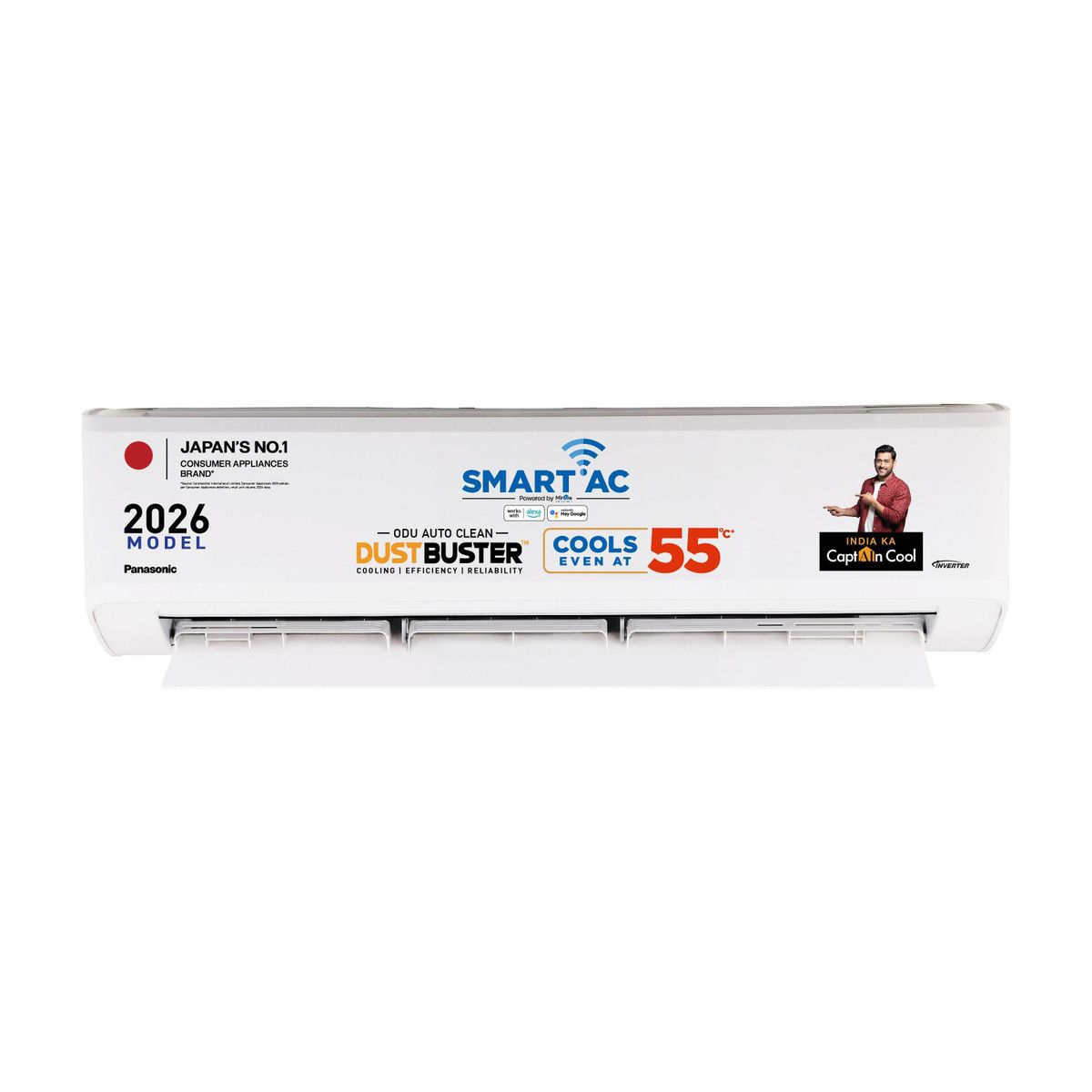
Panasonic CS/CU-NU18BKY5WX 1.5 Ton 5-Star AC Review
The Panasonic CS/CU-NU18BKY5WX is a very efficient 1.5 ton 5-star inverter AC with strong filtration, held back by service responsiveness that varies sharply by city.