Air Conditioners Review
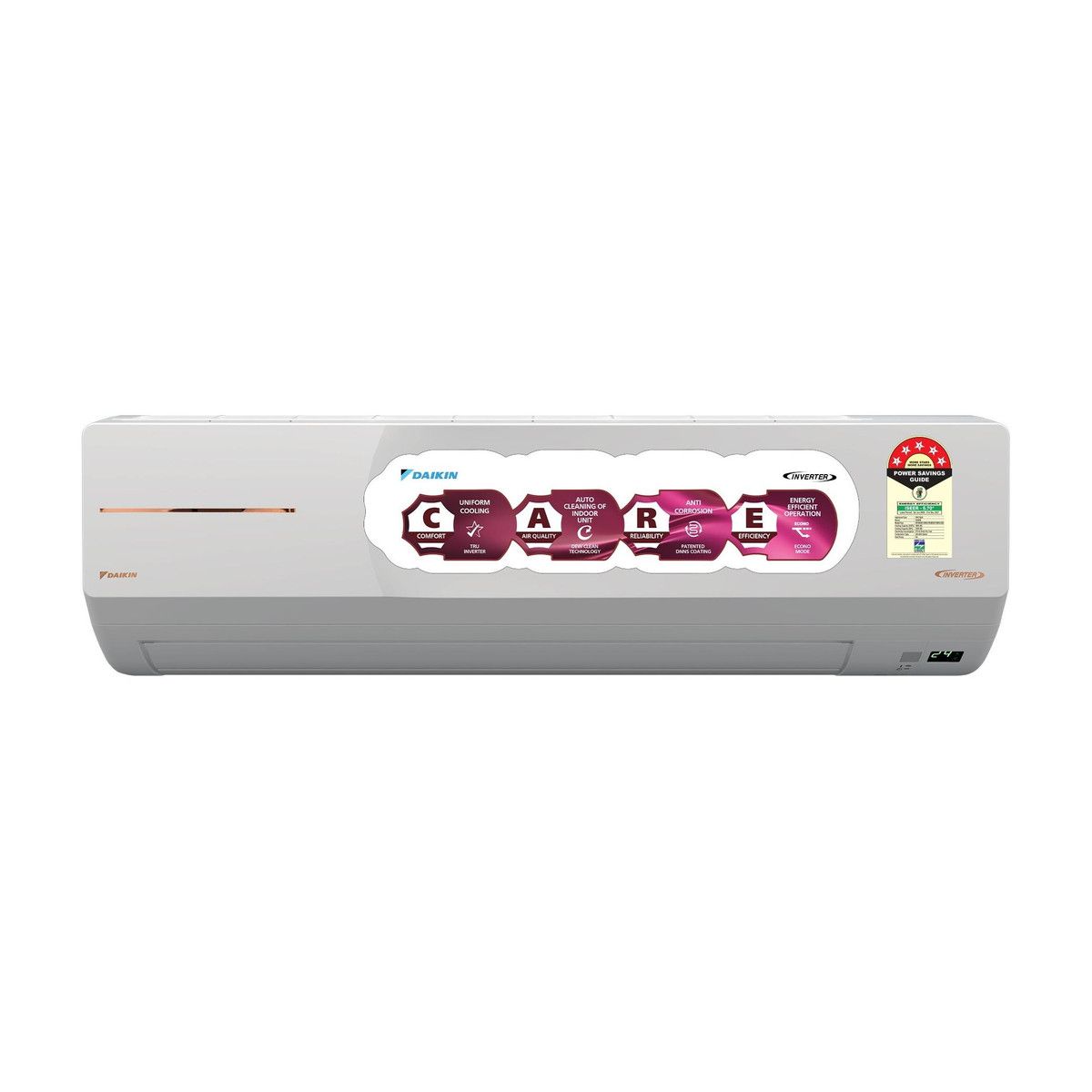
Daikin MTKM50XV16 1.5 Ton 5-Star Inverter AC Review
Our verdict
The Daikin MTKM50XV16 is a well-built 1.5 ton 5-star inverter split AC with strong cooling and stable Wi-Fi, best for metro homes where Daikin service is close by.
Buy it if
- Metro and tier-1 homes with a nearby Daikin service centre
- Daily eight-to-ten-hour use where build quality matters
- Buyers who want a stable Wi-Fi app
Skip it if
- You live in a tier-2 or tier-3 town with thin Daikin coverage
- You want the lowest purchase price
What we like
- Held 24 °C at 45 °C outdoors with a steady compressor
- ISEER of about 5.70 keeps running cost low
- Solid indoor and outdoor build
- Stable Wi-Fi connection through the Daikin Mobile Controller app
What we don’t
- Fewer service centres than LG, Samsung or Voltas outside big cities
- Costs more than Carrier and Voltas
- Fascia and swing look plain next to rivals
Score breakdown
- Performance
- 8.6
- Build quality
- 8.8
- Noise
- 8.5
- Ease of use
- 8.0
- Features
- 7.9
- Value for money
- 7.4
- Energy efficiency
- 8.7
- After-sales service
- 7.3
The Daikin MTKM50XV16 suits a metro household that runs the AC for long hours and values build quality and a stable app over the lowest price. The trade-off is service reach. Daikin has fewer authorised centres than LG, Samsung or Voltas outside the big cities, so a smaller-town buyer should check their pin code first.
How well does it cool at 45 °C?
In a 160 sq ft room at 34 °C, the Daikin reached 24 °C in about 21 minutes. At 45 °C outdoors it took 30 minutes and then held the set point without drift, with draw near 1,000 W during pull-down. The Coanda airflow hugs the ceiling and spreads across the room, so the corner farthest from the unit cooled within a degree of the rest.
How noisy is it at night?
Indoors it measured about 32 dB on low and 45 dB on turbo at one metre. The compressor is smooth when it ramps. The outdoor unit is firm but not harsh, and we did not hear it from the adjoining room. For most bedrooms this is quiet enough that you will stop noticing it within a night.
What will it cost to run?
With a listed ISEER of about 5.70, the Daikin is among the most efficient here. Settled at 24 °C it drew about 660 W, and an eight-hour night used about 5.3 units. At Rs 8 per unit, nightly use works out to roughly Rs 1,270 a month. Setting the AC to 25 or 26 °C with the fan on auto trims that further.
Will it work on an inverter or with unstable power?
On a 3 kVA home inverter it ran steadily after a brief start-up surge. At 185 V it kept cooling, and it restarted by itself after a cut without losing its settings. Daikin advertises stabiliser-free operation in this range, but a voltage-protected plug remains cheap insurance in older colonies.
Is the Wi-Fi app any good?
The Daikin Mobile Controller app connected quickly and stayed connected across a week of router restarts, which is not true of every brand. It handles on/off, temperature, modes and schedules. It does not have the geo-fencing of Carrier.
What about service, installation and long-term upkeep?
Owner feedback is positive on build and cooling. The consistent caution is service coverage in tier-2 and tier-3 cities, where technician visits can take longer than LG or Voltas. Installation is charged separately by the retailer, and extra copper piping beyond the included length is billed on top; get that quote in writing. Clean the filters monthly in summer and book a coil service before the season starts.
Who should pick a different AC?
If you are outside a metro, the LG is safer for service. If you simply want the lowest price, the Carrier and the Voltas cost less and cool well. The Daikin is the better choice when you will use it for long hours and have a service centre nearby.
Test results
| Cool-down, 34 to 24 °C How we test this : Cool-down, 34 to 24 °C | 21 min 160 sq ft bedroom. |
|---|---|
| Cool-down at 45 °C outdoors How we test this : Cool-down at 45 °C outdoors | 30 min 160 sq ft bedroom. |
| Holds 24 °C at 45 °C outdoors How we test this : Holds 24 °C at 45 °C outdoors | Pass |
| Power draw, settled at 24 °C How we test this : Power draw, settled at 24 °C | 660 W |
| Energy over an eight-hour night How we test this : Energy over an eight-hour night | 5.3 units |
| Indoor noise, low fan How we test this : Indoor noise, low fan | 32 dB |
| Indoor noise, turbo How we test this : Indoor noise, turbo | 45 dB |
| Runs on a 3 kVA home inverter How we test this : Runs on a 3 kVA home inverter | Pass Ran steadily after a brief start-up surge. |
| Keeps cooling at 185 V or below How we test this : Keeps cooling at 185 V or below | Pass Tested at 185 V. |
Measured on the unit we tested.
How we tested
We ran the Daikin for five weeks in a Jaipur flat with afternoon outdoor temperatures of 38 to 45 °C. We timed pull-down from 34 to 24 °C, logged power at the settled 24 °C set point and over eight-hour nights, measured indoor noise at one metre, and repeated the pull-down at 43 to 46 °C. We also checked behaviour on a 3 kVA inverter and with the supply at 185 V.
We bought this unit at retail price.
How does the Daikin MTKM50XV16 1.5 Ton 5 Star Inverter Split AC compare?
-
LG AS-Q19AWZE 1.5 Ton 5 Star AI Dual Inverter Split AC A− 8.7
The LG AS-Q19AWZE is the safer choice outside the metros thanks to its wider service network, and it cooled faster and was quieter on low (29 against 32 dB). The Daikin lists a higher ISEER (about 5.70 against 5.10), though it used 5.3 units a night against the LG's 5.1, and its app held its connection better.
Full comparison : Daikin MTKM50XV16 1.5 Ton 5 Star Inverter Split AC vs LG AS-Q19AWZE 1.5 Ton 5 Star AI Dual Inverter Split AC -
Carrier CAI18EE5R36W0 1.5 Ton 5 Star Inverter Split AC B+ 8.0
The Carrier CAI18EE5R36W0 costs less, adds geo-fencing and used slightly less power over an eight-hour night (5.0 against 5.3 units). The Daikin is better built and was quieter on low (32 against 33 dB); both have thinner service than LG outside big cities.
-
Voltas 183V Vectra CAW 1.5 Ton 3 Star Inverter Split AC B− 7.2
The Voltas 183V Vectra CAW costs less, cools well and has wider service in small towns, but as a 3-star model it used 7.2 units over an eight-hour night against the Daikin's 5.3 and was louder on low (38 against 32 dB).
Key specs
| Capacity | 1.5 ton |
|---|---|
| BEE rating | 5 star (ISEER about 5.70) |
| Compressor | Inverter with Neo-Swing compressor |
| Airflow | Coanda airflow |
| Wi-Fi | Yes, via Daikin Mobile Controller app |
Questions buyers ask
Is the Daikin MTKM50XV16 good for heavy daily use?
Yes. The Daikin MTKM50XV16 ran eight to ten hours a day for five weeks without faults, and the compressor held 24 °C at 45 °C outdoors. Build quality is among the best of the six ACs here.
How much electricity does the Daikin MTKM50XV16 use?
It drew about 660 W at a settled 24 °C and 5.3 units over an eight-hour night. At Rs 8 per unit that is roughly Rs 1,270 a month for nightly use.
Is Daikin service available in small towns?
Coverage is thinner than LG or Voltas in tier-2 and tier-3 towns. Check the service centre list for your pin code before buying the Daikin MTKM50XV16.
Also consider
- LG
Air Conditioners
LG AS-Q19AWZE 1.5 Ton 5-Star Dual Inverter AC Review
The LG AS-Q19AWZE is a 1.5 ton 5-star dual inverter split AC that cools fast, runs quietly and has the widest service network in India, making it the safest pick for most families.
Editor’s Choice -
Air Conditioners
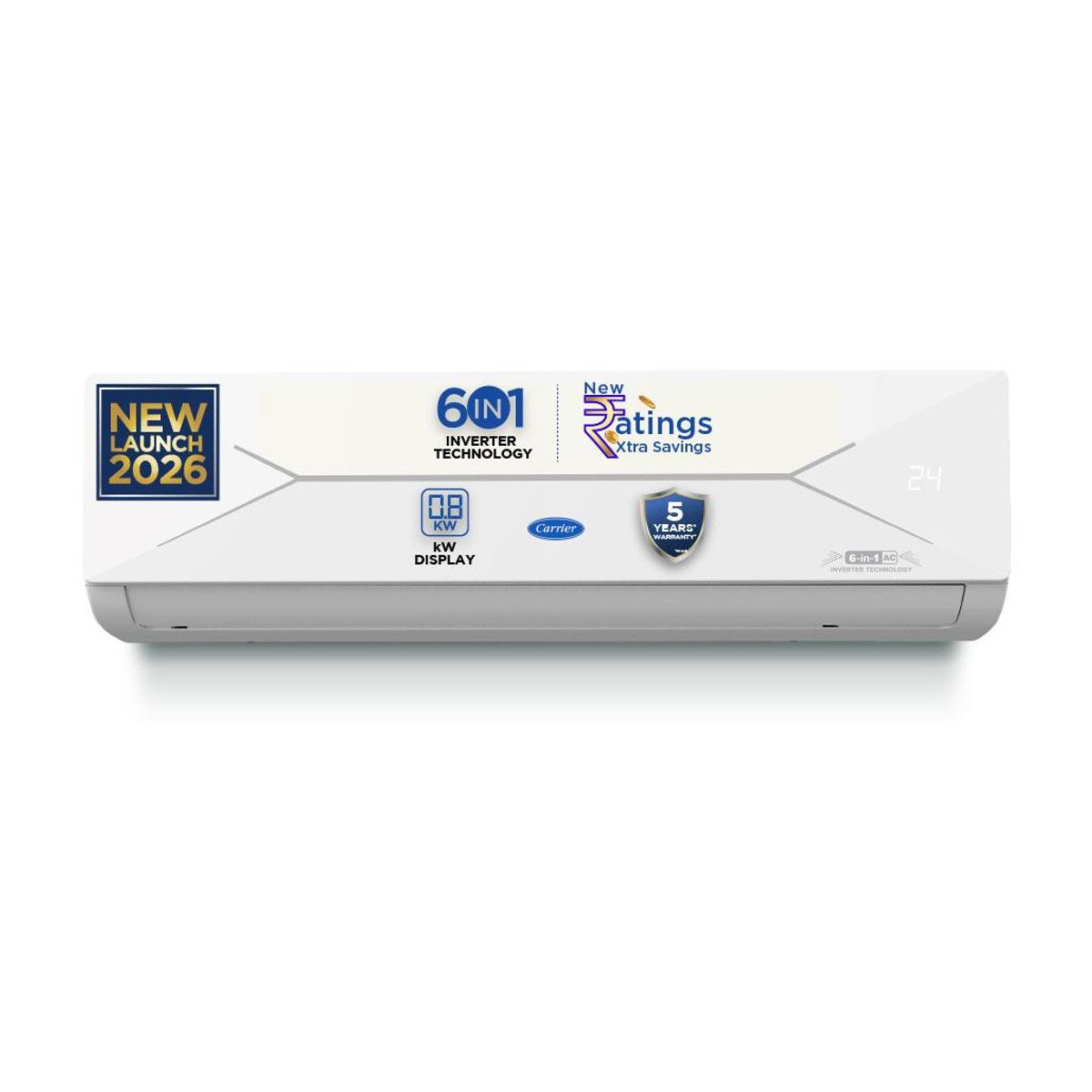
Carrier CAI18EE5R36W0 1.5 Ton 5-Star Flexicool AC Review
The Carrier CAI18EE5R36W0 is a 1.5 ton 5-star inverter split AC with the strongest feature list for its price, low running cost and a 52 °C rating, held back only by a smaller service network.
Best Value