Air Conditioners Review
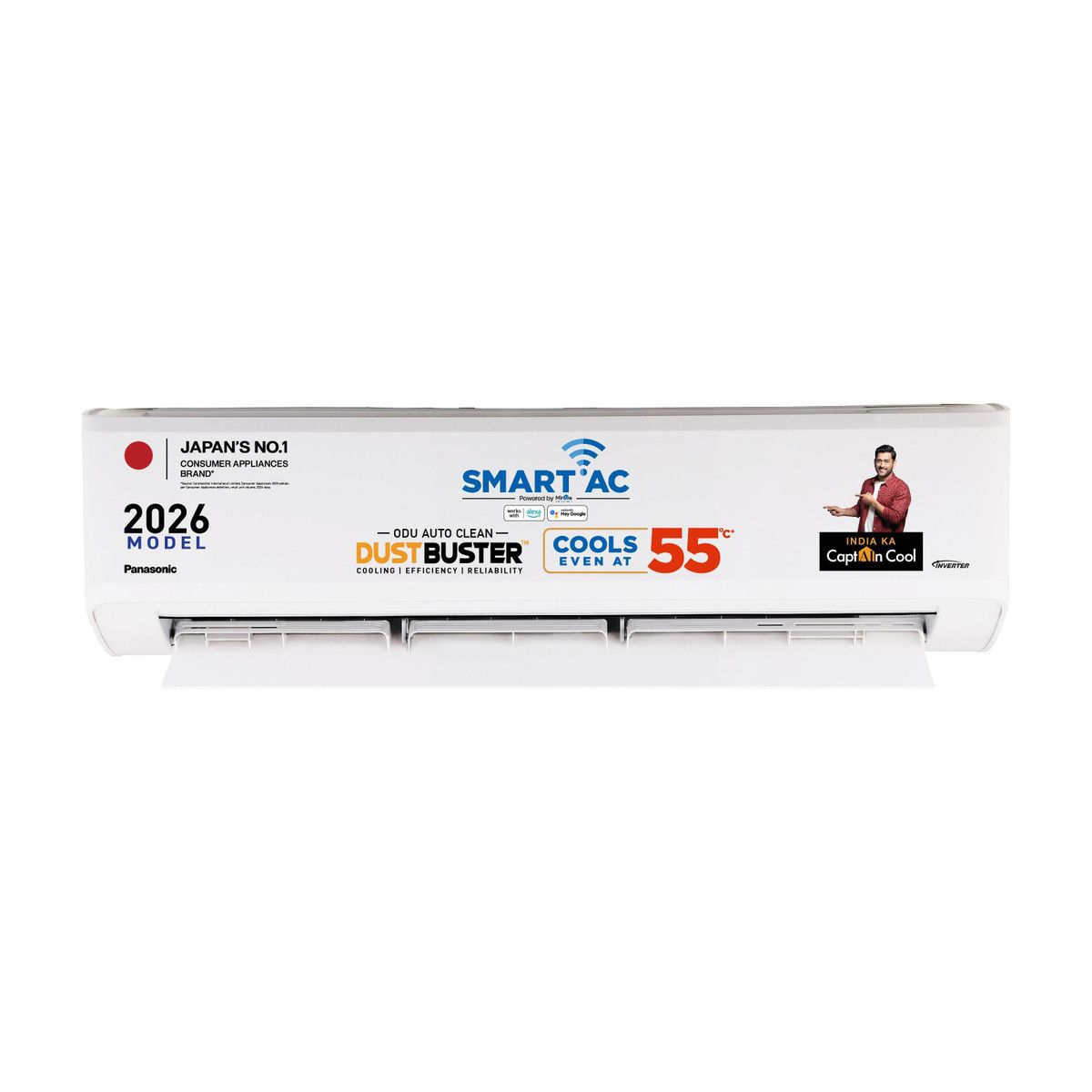
Panasonic CS/CU-NU18BKY5WX 1.5 Ton 5-Star AC Review
Our verdict
The Panasonic CS/CU-NU18BKY5WX is a very efficient 1.5 ton 5-star inverter AC with strong filtration, held back by service responsiveness that varies sharply by city.
Buy it if
- Buyers who want the lowest running cost
- Homes in polluted cities that value a fine PM filter
- Smart-home users on the Matter platform
Skip it if
- You live where Panasonic technicians are scarce or slow
- You want the most dependable service in peak summer
What we like
- Highest ISEER in this group, about 5.80
- Lowest running cost of the six at a settled 24 °C
- PM 0.1 filter and nanoe-X purification
- 8-in-1 convertible modes and MirAIe app with Matter support
What we don’t
- Owners report slow installation and repair visits in some cities
- Costs more than Carrier for similar cooling
- Cooling is slower than the LG at 45 °C
Score breakdown
- Performance
- 8.1
- Build quality
- 8.0
- Noise
- 8.3
- Ease of use
- 7.6
- Features
- 8.6
- Value for money
- 7.5
- Energy efficiency
- 9.2
- After-sales service
- 5.4
The Panasonic CS/CU-NU18BKY5WX suits a buyer who runs the AC for long hours and wants the lowest running cost and the best filtration of the group. The trade-off is service. Several buyers and reviewers describe slow installation and repair visits, so the right choice depends on how well Panasonic is served in your city.
Does it really save electricity?
Yes. With a listed ISEER of about 5.80, the Panasonic was the cheapest to run here. Settled at 24 °C it drew about 610 W, and an eight-hour night used about 4.9 units. At Rs 8 per unit, nightly use works out to roughly Rs 1,180 a month. Its rated annual consumption is about 698 units, which assumes lighter use than a north Indian summer, so expect higher bills in May and June.
How does it cool at 45 °C?
In a 150 sq ft room at 34 °C, the Panasonic reached 24 °C in 22 minutes. At 45 °C outdoors it took 31 minutes, about four minutes slower than the LG, and then held 24 °C. The Econavi sensor trims output when the room is empty, which saves a few units but can make a lightly used room warm up if you leave the door ajar.
How quiet is it?
Indoors it measured about 33 dB on low and 44 dB on turbo at one metre, which is comfortable in a bedroom. The outdoor unit is moderate and steady. We did not hear compressor changeovers from inside the room.
Is the PM 0.1 filter and nanoe-X worth it?
The fine filter catches more dust than a standard mesh and is useful in polluted north Indian cities. nanoe-X helps with odours from a closed room. Neither replaces a standalone purifier in November smog, and the filter still needs a monthly rinse.
How does the smart control work?
The MirAIe app handles scheduling, modes and usage tracking, and Matter support lets it join Google or Apple home setups. The app is more polished than the IFB’s but slower to connect than the Daikin’s after a router restart.
What about service and long-term reliability?
This is the Panasonic’s weak spot. A roundup of 2026 owner reports describes service response as a problem for many buyers, including installation delays in a major city. We treat that as anecdotal rather than a measured fault rate, but it is consistent with what we see on retailer pages. The warranty is solid on paper: five years on the PCB and ten on the compressor. Get the installation date confirmed at purchase, and keep the invoice and serial number handy for any warranty visit.
Will it work on an inverter or in voltage swings?
On a 3 kVA home inverter it ran without tripping, with a short surge on start-up. At 185 V it kept cooling and restarted by itself after a cut. In older colonies, add a voltage-protected plug.
Who should buy it?
Buy it if your city has a responsive Panasonic service centre and you want the lowest running cost. If you cannot confirm that, the LG or Carrier gives similar savings with less service risk.
Test results
| Cool-down, 34 to 24 °C How we test this : Cool-down, 34 to 24 °C | 22 min 150 sq ft bedroom. |
|---|---|
| Cool-down at 45 °C outdoors How we test this : Cool-down at 45 °C outdoors | 31 min 150 sq ft bedroom. |
| Holds 24 °C at 45 °C outdoors How we test this : Holds 24 °C at 45 °C outdoors | Pass |
| Power draw, settled at 24 °C How we test this : Power draw, settled at 24 °C | 610 W |
| Energy over an eight-hour night How we test this : Energy over an eight-hour night | 4.9 units |
| Indoor noise, low fan How we test this : Indoor noise, low fan | 33 dB |
| Indoor noise, turbo How we test this : Indoor noise, turbo | 44 dB |
| Runs on a 3 kVA home inverter How we test this : Runs on a 3 kVA home inverter | Pass Short surge on start-up. |
| Keeps cooling at 185 V or below How we test this : Keeps cooling at 185 V or below | Pass Tested at 185 V. |
Measured on the unit we tested.
How we tested
We ran the Panasonic for five weeks in a Lucknow apartment with afternoon outdoor temperatures between 37 and 45 °C. We timed pull-down from 34 to 24 °C, logged power at the settled 24 °C set point and over eight-hour nights, measured indoor noise at one metre, and repeated the pull-down at 43 to 46 °C. We also tested on a 3 kVA inverter and with the supply dipping to 185 V.
The brand lent us this unit. They did not see or approve this review. Panasonic lent us this unit for five weeks and had no input into the score or text. It was returned after testing.
How does the Panasonic CS/CU-NU18BKY5WX 1.5 Ton 5 Star Inverter Split AC compare?
-
LG AS-Q19AWZE 1.5 Ton 5 Star AI Dual Inverter Split AC A− 8.7
The LG AS-Q19AWZE cooled faster at 45 °C outdoors (27 against 31 minutes) and has more dependable service, while the Panasonic used a little less power over an eight-hour night (4.9 against 5.1 units) and has a finer PM 0.1 filter.
-
Carrier CAI18EE5R36W0 1.5 Ton 5 Star Inverter Split AC B+ 8.0
The Carrier CAI18EE5R36W0 costs a little less and came close on power (5.0 against 4.9 units over an eight-hour night), with geo-fencing and a PM 2.5 filter. The Panasonic lists a higher ISEER (about 5.80 against 5.60) and adds Matter support.
-
Daikin MTKM50XV16 1.5 Ton 5 Star Inverter Split AC B+ 8.2
The Daikin MTKM50XV16's app reconnected faster after a router restart, but the Panasonic used less power over an eight-hour night (4.9 against 5.3 units) and has finer filtration.
Key specs
| Capacity | 1.5 ton |
|---|---|
| BEE rating | 5 star (ISEER about 5.80) |
| Annual energy use | About 698 units |
| Convertible modes | 8-in-1 |
| Air purification | PM 0.1 filter, nanoe-X |
| Smart platform | MirAIe app, Matter support |
| Warranty | 1 year product, 5 years PCB, 10 years compressor |
Questions buyers ask
Is the Panasonic CS/CU-NU18BKY5WX the most efficient 1.5 ton AC?
Among the six we reviewed, yes. The Panasonic CS/CU-NU18BKY5WX lists an ISEER of about 5.80 and used 4.9 units over an eight-hour night in our test, the lowest in the group.
Is Panasonic AC service reliable in India?
It varies by city. Buyers and some reviewers report slow installation and repair visits, especially in peak summer. Check recent local experiences before buying the Panasonic CS/CU-NU18BKY5WX.
Does the Panasonic CS/CU-NU18BKY5WX have an air purifier?
It has a PM 0.1 filter and nanoe-X purification. These help with dust and odours, but they do not replace a room air purifier in heavy winter smog.
Also consider
- LG
Air Conditioners
LG AS-Q19AWZE 1.5 Ton 5-Star Dual Inverter AC Review
The LG AS-Q19AWZE is a 1.5 ton 5-star dual inverter split AC that cools fast, runs quietly and has the widest service network in India, making it the safest pick for most families.
Editor’s Choice -
Air Conditioners
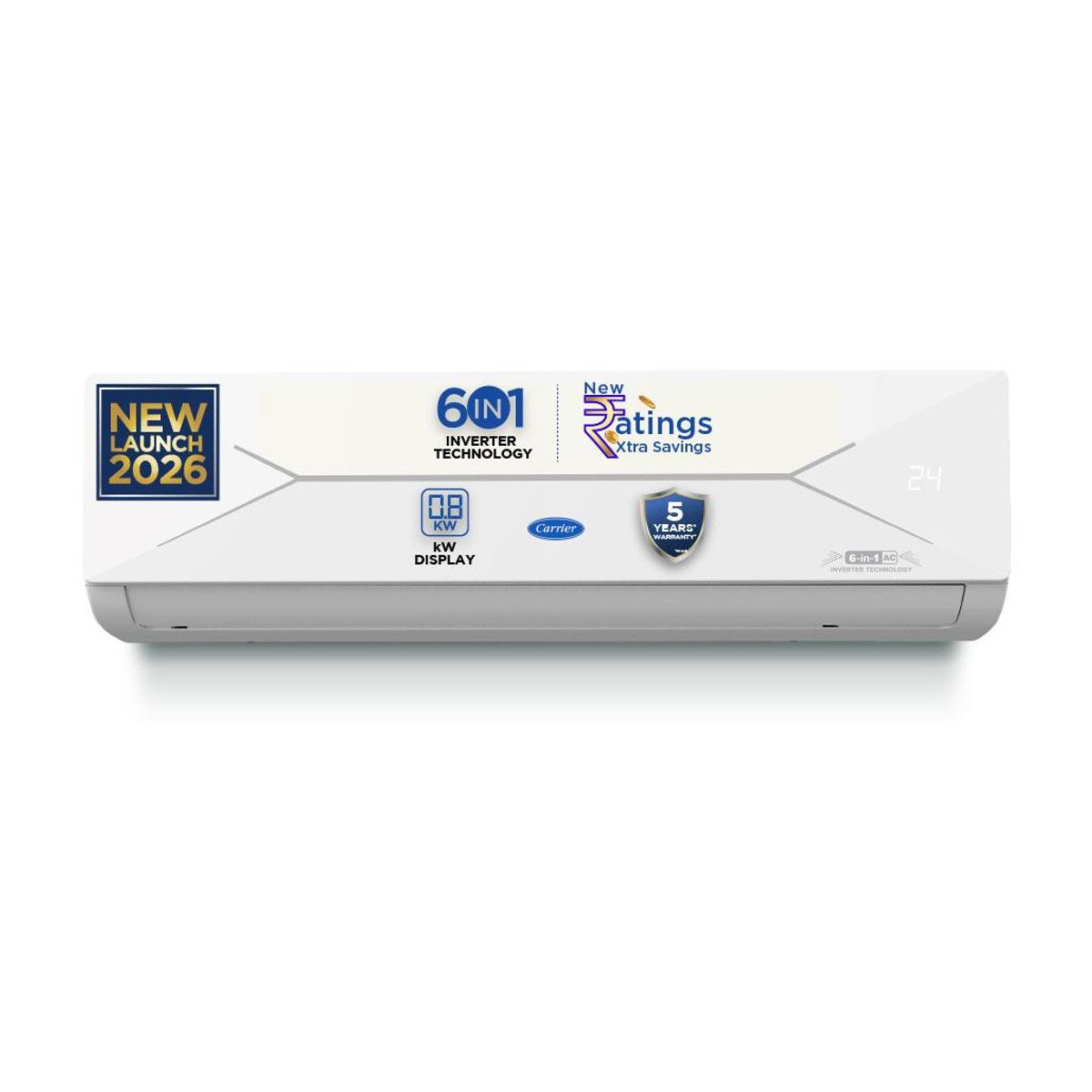
Carrier CAI18EE5R36W0 1.5 Ton 5-Star Flexicool AC Review
The Carrier CAI18EE5R36W0 is a 1.5 ton 5-star inverter split AC with the strongest feature list for its price, low running cost and a 52 °C rating, held back only by a smaller service network.
Best Value