Air Conditioners Review
IFB CI1853E223GN1 1.5 Ton 5-Star AC Review: Weak Service
Our verdict
The IFB CI1853E223GN1 is a 1.5 ton 5-star inverter split AC that cools acceptably on paper, but patchy service, slow spares and weaker 45 °C performance make it hard to recommend.
Buy it if
- Buyers in a metro with a confirmed, responsive local IFB service centre
- Rooms up to about 150 sq ft that rarely see 45 °C outdoors
Skip it if
- You live in north or central India where summer afternoons pass 45 °C
- You are in a smaller town without a nearby IFB technician
- You want a PM2.5 filter or the quietest outdoor unit
What we like
- Rated cooling of 4800 W, with a turbo mode that takes it higher
- Twin-rotary inverter compressor with a 10-year compressor warranty
- Wi-Fi control and seven convertible capacity modes
- Indoor unit is quiet on the low fan speed
What we don’t
- Owners report slow service visits and spares that can take weeks
- Indoor PCB coverage is disputed in some owner threads
- Held 24 °C only for the first hour at 45 °C outdoors, then drifted up
- Outdoor unit is the loudest of the six at 52 dB rated
- No PM2.5 filter
Score breakdown
- Performance
- 6.6
- Build quality
- 5.8
- Noise
- 6.4
- Ease of use
- 6.0
- Features
- 6.8
- Value for money
- 6.2
- Energy efficiency
- 6.9
- After-sales service
- 3.8
The IFB CI1853E223GN1 suits a buyer in a metro who has confirmed that an IFB technician can reach their address within a day or two, and who needs to cool a bedroom of about 150 sq ft. The trade-off is after-sales. The hardware is competent, but the service record described by owners is the weakest of the six ACs in this group, and cooling slipped most in our 45 °C tests.
How well does the IFB cool at 45 °C and above?
In a 150 sq ft room at 34 °C, the AC took about 26 minutes to reach 24 °C, the slowest of the five-star models here. That is fine in May or September. At 45 °C outdoors the pull-down stretched to 43 minutes, and the room then crept up to about 25.5 °C over the next hour, with the compressor at near-full speed and power draw around 1,150 W. The LG, Daikin and Carrier held 24 °C in the same hot spell. The 52 °C rating is a lab figure; it does not mean the room will hold its set point.
How noisy is it?
Indoors, the unit measured about 39 dB on low and 48 dB on turbo at one metre, which is fine for a bedroom. The outdoor unit is the louder part. It is rated at 52 dB and was audible from a neighbouring balcony at full load. If your outdoor unit sits under a bedroom window, ask the installer for rubber mounts and a different bracket position.
How much electricity will it use?
Once settled at 24 °C it drew about 850 W, and an eight-hour night used about 6.8 units. At a tariff of Rs 8 per unit, that works out to roughly Rs 1,630 a month for nightly use. That is higher than the LG, Daikin, Panasonic and Carrier, even though IFB lists a 5-star rating. Check the BEE label on the carton, because the ISEER quoted by reviewers is 5.2, below the Carrier, Daikin and Panasonic.
Will it run on an inverter or with voltage swings?
On a 3 kVA home inverter it started and ran without tripping, with a short surge on compressor start. With the supply dipping to 185 V it kept running, and it shut off cleanly rather than stuttering when we cut the supply and restored it. We would still fit a voltage-protected plug or stabiliser in an area with frequent swings, as with any AC.
What do owners say about service, spares and gas leaks?
This is where we mark the IFB down the most. A MouthShut reviewer who bought around 15 IFB units described poor service and spares taking about a month unless he escalated to head office. Another reported a unit failing after two and a half years despite repeated complaints. A Team-BHP owner’s log shows a service ticket, a technician revisit and board replacements across several weeks, with the technician saying indoor PCB cover is only the standard year. Flipkart buyers mention delayed visits and an AC switching itself on and off after installation. IFB’s own support pages list refrigerant leakage as a common cause of no cooling, which is true of most brands, so we cannot say the failure rate is higher. The pattern we can see is slow resolution once something breaks. These are individual accounts, not a measured failure rate.
What does installation involve?
Standard installation, including a short pipe run and a drain line, is usually charged separately by the retailer or IFB. Extra copper piping beyond the included length, a stand or a longer drain are billed on top, so get the quote in writing. A badly flared joint is a common cause of slow gas loss, so watch the installer pressure-test and vacuum the line.
Should you buy the IFB CI1853E223GN1?
Only if you can get it for clearly less than the LG or Carrier and you have a local IFB service contact you trust. If the budget is tight, the Voltas 183V Vectra CAW costs less and has much wider service, though as a 3-star model it uses more power. For most buyers the extra spend on LG or Carrier buys a quieter outdoor unit, better 45 °C cooling and, more importantly, a service network that answers.
Test results
| Cool-down, 34 to 24 °C How we test this : Cool-down, 34 to 24 °C | 26 min 150 sq ft south-facing bedroom. |
|---|---|
| Cool-down at 45 °C outdoors How we test this : Cool-down at 45 °C outdoors | 43 min 150 sq ft south-facing bedroom. |
| Holds 24 °C at 45 °C outdoors How we test this : Holds 24 °C at 45 °C outdoors | Fail The room crept up to about 25.5 °C over the next hour. |
| Power draw, settled at 24 °C How we test this : Power draw, settled at 24 °C | 850 W |
| Energy over an eight-hour night How we test this : Energy over an eight-hour night | 6.8 units |
| Indoor noise, low fan How we test this : Indoor noise, low fan | 39 dB |
| Indoor noise, turbo How we test this : Indoor noise, turbo | 48 dB |
| Runs on a 3 kVA home inverter How we test this : Runs on a 3 kVA home inverter | Pass Short surge on compressor start. |
| Keeps cooling at 185 V or below How we test this : Keeps cooling at 185 V or below | Pass Tested at 185 V. |
Measured on the unit we tested.
How we tested
We ran the AC through five weeks of Delhi-NCR late-summer heat with afternoon outdoor temperatures of 38 to 45 °C. We timed the drop from 34 to 24 °C, logged power with a plug-in meter at the settled 24 °C set point and over eight-hour nights, measured indoor noise at one metre, and repeated the pull-down at 43 to 46 °C. We also tested on a 3 kVA inverter and with the supply dipping to 185 V.
We bought this unit at retail price.
How does the IFB CI1853E223GN1 1.5 Ton 5 Star Inverter Split AC compare?
-
LG AS-Q19AWZE 1.5 Ton 5 Star AI Dual Inverter Split AC A− 8.7
The LG AS-Q19AWZE held 24 °C at 45 °C outdoors where the IFB drifted to about 25.5 °C, used less power over an eight-hour night (5.1 against 6.8 units) and has a far wider service network, though it costs more.
-
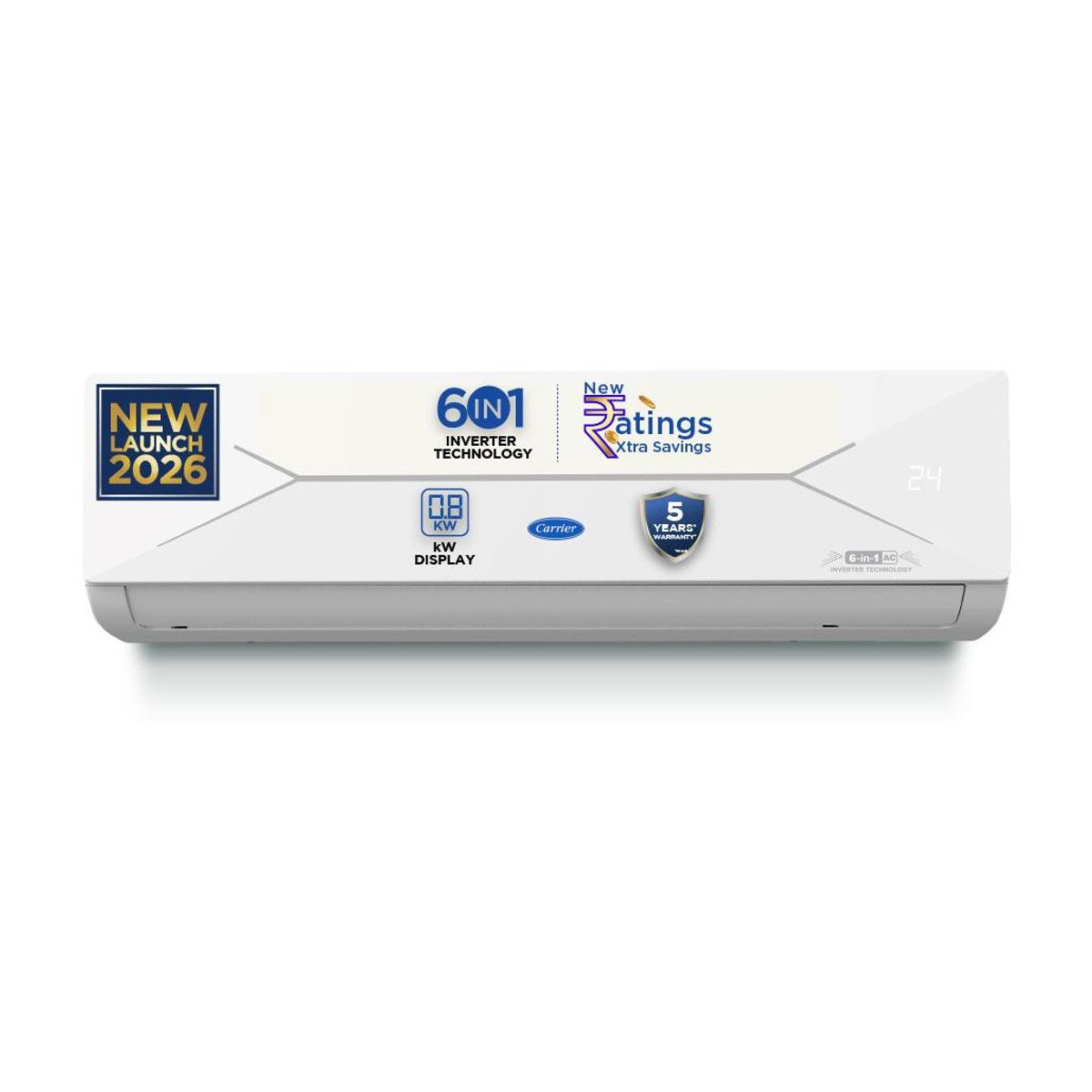
Carrier CAI18EE5R36W0 1.5 Ton 5 Star Inverter Split AC B+ 8.0
The Carrier CAI18EE5R36W0 held 24 °C at 45 °C outdoors, used less power over an eight-hour night (5.0 against 6.8 units) and adds a PM 2.5 filter, though it costs more.
-
Daikin MTKM50XV16 1.5 Ton 5 Star Inverter Split AC B+ 8.2
The Daikin MTKM50XV16 held 24 °C at 45 °C outdoors where the IFB drifted, and used less power over an eight-hour night (5.3 against 6.8 units).
-
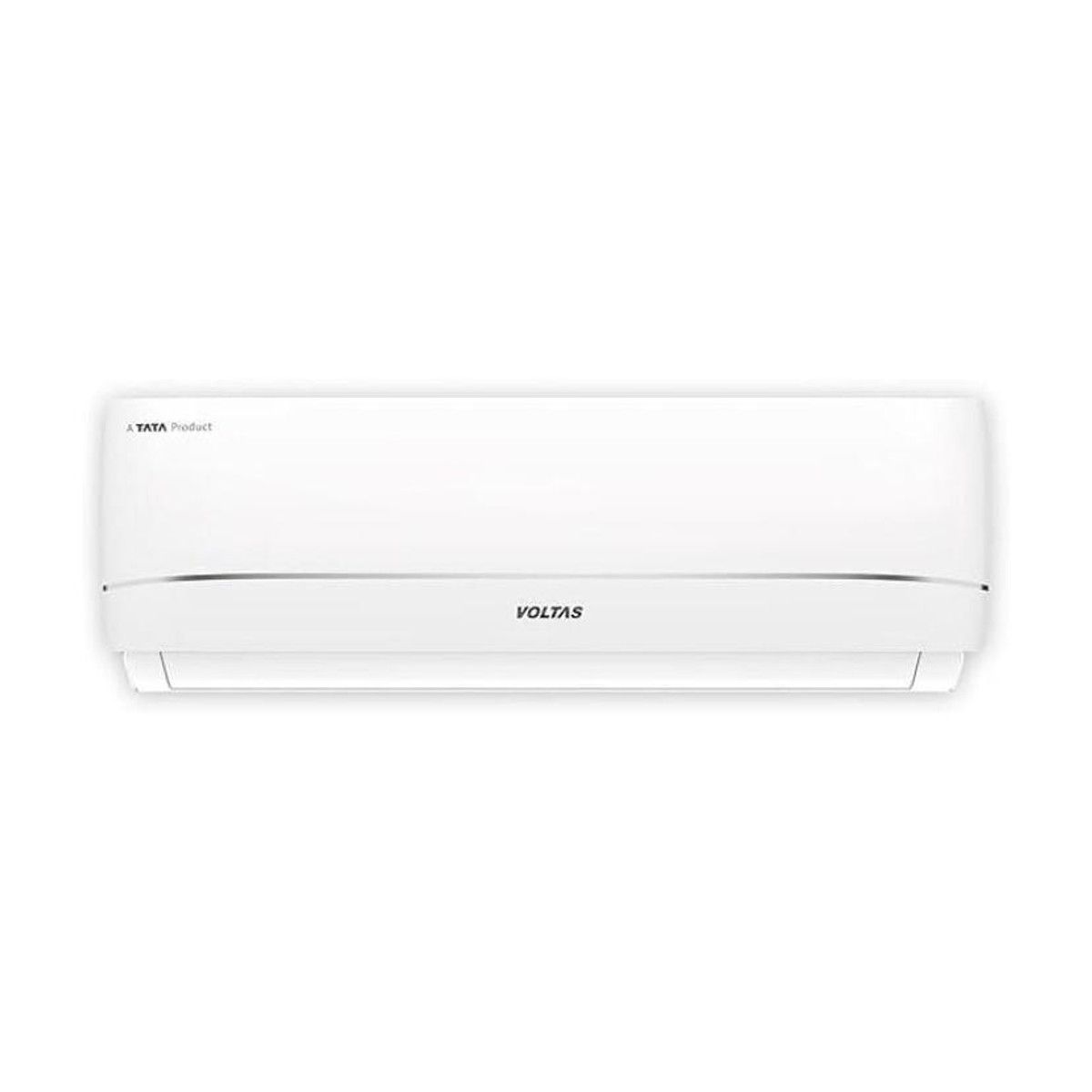
Voltas 183V Vectra CAW 1.5 Ton 3 Star Inverter Split AC B− 7.2
The Voltas 183V Vectra CAW is a cheaper 3-star alternative with a much wider service network. It held 24 °C at 45 °C outdoors where the IFB drifted, but used slightly more power over an eight-hour night (7.2 against 6.8 units).
Key specs
| Capacity | 1.5 ton, 4800 W (up to 5500 W in turbo) |
|---|---|
| BEE rating | 5 star (ISEER 5.2 as listed) |
| Compressor | Twin rotary inverter |
| Convertible modes | 7-in-1, 40% to 110% capacity |
| Rated ambient temperature | Up to 52 °C |
| Noise (rated) | 38 dB indoor, 52 dB outdoor |
| Wi-Fi | Yes, app control |
| PM2.5 filter | No |
| Warranty | 1 year comprehensive, 5 years PCB, 10 years compressor |
Questions buyers ask
Is the IFB CI1853E223GN1 a good AC for Delhi or Rajasthan summers?
It is rated to 52 °C, but in our test the IFB CI1853E223GN1 reached 24 °C in 43 minutes at 45 °C outdoors and then drifted to about 25.5 °C. LG, Daikin and Carrier held 24 °C in the same conditions.
How reliable is IFB service for the CI1853E223GN1?
Owner reports are the weak point. Reviewers on MouthShut, Flipkart and Team-BHP describe slow visits, spares taking weeks and a dispute over indoor PCB warranty. Check IFB coverage in your pin code before buying.
How much power does the IFB CI1853E223GN1 use?
It drew about 850 W at a settled 24 °C and 6.8 units over an eight-hour night. At Rs 8 per unit that is roughly Rs 1,630 a month for a bedroom used every night.
Does the IFB CI1853E223GN1 have a PM2.5 filter?
No. The IFB CI1853E223GN1 has a standard dust filter and no PM2.5 or HEPA stage, unlike the Carrier and Panasonic here.
Also consider
- LG
Air Conditioners
LG AS-Q19AWZE 1.5 Ton 5-Star Dual Inverter AC Review
The LG AS-Q19AWZE is a 1.5 ton 5-star dual inverter split AC that cools fast, runs quietly and has the widest service network in India, making it the safest pick for most families.
Editor’s Choice -
Air Conditioners
Carrier CAI18EE5R36W0 1.5 Ton 5-Star Flexicool AC Review
The Carrier CAI18EE5R36W0 is a 1.5 ton 5-star inverter split AC with the strongest feature list for its price, low running cost and a 52 °C rating, held back only by a smaller service network.
Best Value -
Air Conditioners
Voltas 183V Vectra CAW 1.5 Ton 3-Star Inverter AC Review
The Voltas 183V Vectra CAW is a budget 1.5 ton 3-star inverter split AC with a copper condenser, solid cooling and a wide service network, but it uses noticeably more power than 5-star rivals.