Buying guide · Updated for 2026
Best 1.5 Ton ACs in India 2026
Quick answer
The LG AS-Q19AWZE is the best 1.5 ton AC for most Indian homes: it cooled fastest, stayed quiet and has the widest service network. The Carrier CAI18EE5R36W0 is the value alternative, with more features and slightly lower running cost for less money, if Carrier service reaches your city.
Our picks
We may earn a commission when you buy through links on this page. It never affects our verdict, and we never accept paid reviews. How we make money
- LG
Best overall
LG AS-Q19AWZE 1.5 Ton 5 Star AI Dual Inverter Split AC
For families who want fast, quiet cooling that holds through 45 °C afternoons and a technician who can reach most district towns. You pay more than for the Carrier or Voltas, and its ISEER is lower than the Panasonic's, Daikin's or Carrier's.
- Pulled the room from 34 to 24 °C in about 19 minutes
- Held 24 °C at 45 °C outdoors with no drift
- Higher price than Carrier or Voltas for similar cooling
-
Best for long daily use
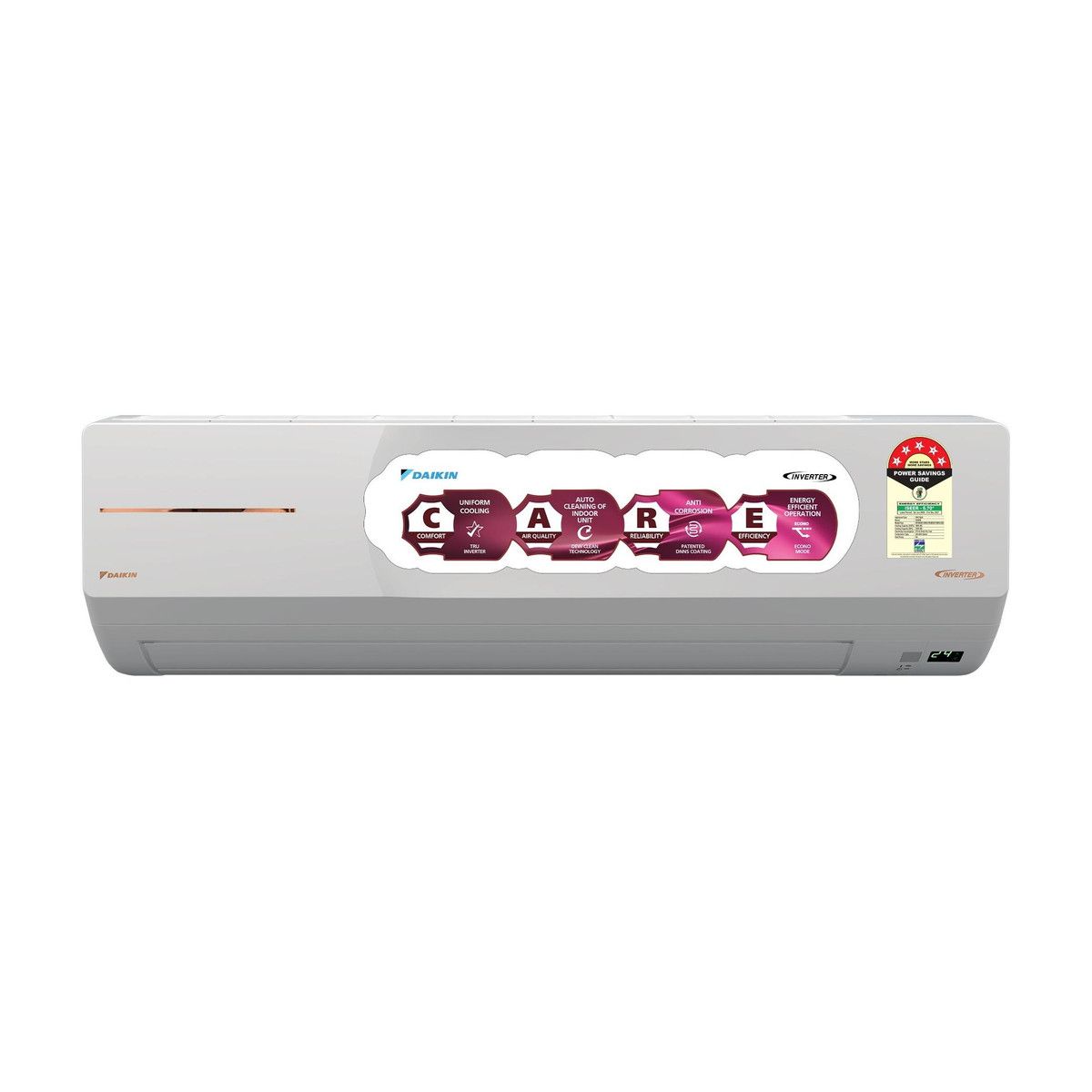
Daikin MTKM50XV16 1.5 Ton 5 Star Inverter Split AC
For metro homes that run the AC eight to ten hours a day and value solid build and a Wi-Fi app that stays connected. Daikin service is thinner in tier-2 and tier-3 towns, and it costs more than the Carrier or Voltas.
- Held 24 °C at 45 °C outdoors with a steady compressor
- ISEER of about 5.70 keeps running cost low
- Fewer service centres than LG, Samsung or Voltas outside big cities
-
Best value
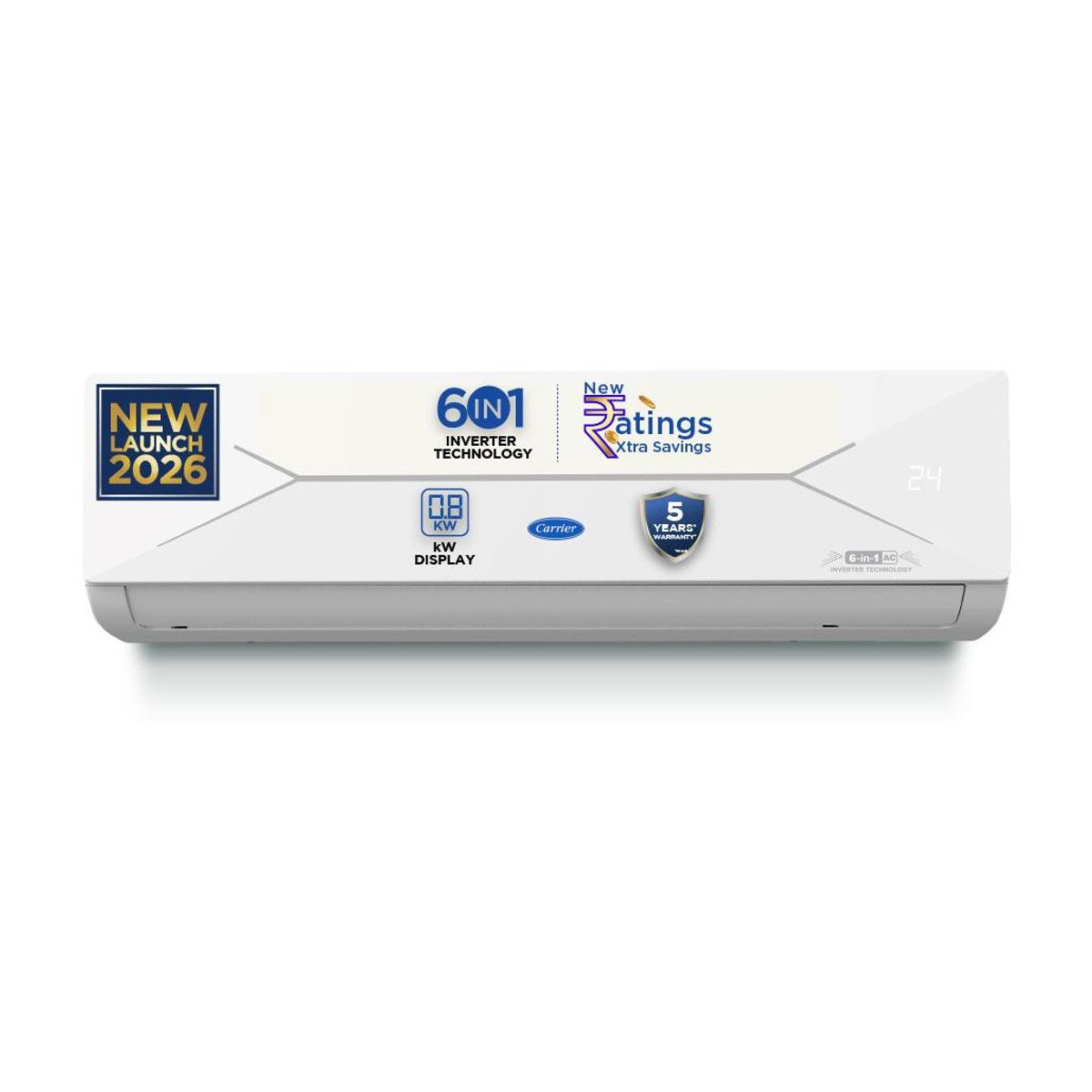
Carrier CAI18EE5R36W0 1.5 Ton 5 Star Inverter Split AC
For buyers in larger cities who want the most features for the money: geo-fencing, an energy display, a leak detector and a PM 2.5 filter, with low running cost. Carrier's service network is smaller than LG's, and the indoor unit is a little louder on low.
- Annual consumption listed at about 663 units, with ISEER 5.60
- Wi-Fi with geo-fencing, an energy display and a refrigerant leak detector
- Service network is smaller than LG or Voltas
-
Most efficient
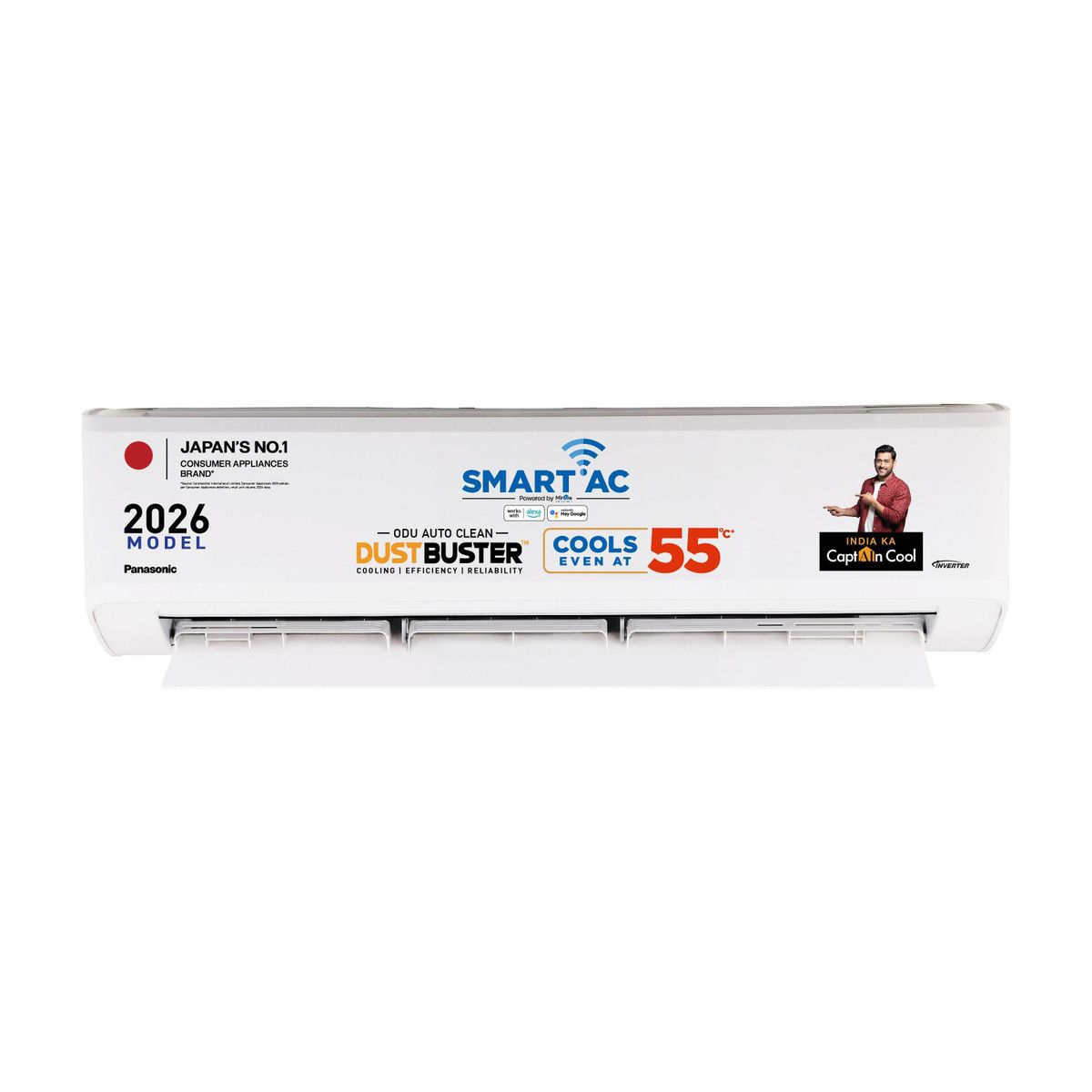
Panasonic CS/CU-NU18BKY5WX 1.5 Ton 5 Star Inverter Split AC
For long-hours users in polluted cities who want the highest ISEER and lowest night-time power use of the group, plus a PM 0.1 filter and nanoe-X. Owners report slow installation and repair visits in some cities, so check local service first.
- Highest ISEER in this group, about 5.80
- Lowest running cost of the six at a settled 24 °C
- Owners report slow installation and repair visits in some cities
-
Best budget pick
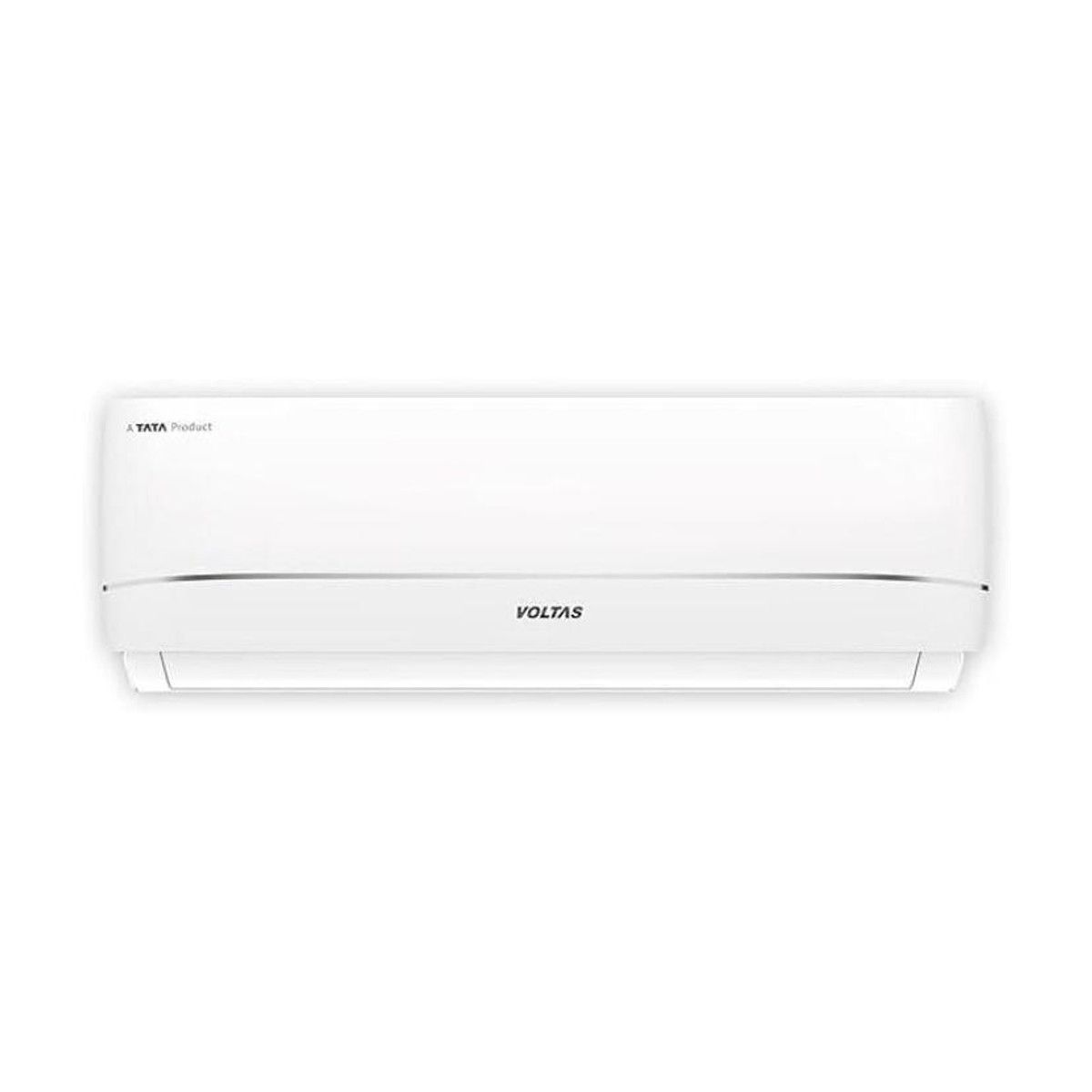
Voltas 183V Vectra CAW 1.5 Ton 3 Star Inverter Split AC
For buyers who want the lowest upfront price from a major brand, a copper condenser and a wide service network, and who run the AC a few hours a day. As a 3-star model it uses clearly more power than the 5-star picks and is louder.
- Lowest price in this group
- Copper condenser and 4800 W rated cooling
- ISEER of 3.8 means higher electricity bills than 5-star models
Buying advice
For most Indian homes, the right AC is a 1.5 ton 5-star inverter split from a brand with a service centre close to you. Of the six we tested, the LG AS-Q19AWZE is the safest all-round choice because it cools fast, runs quietly and can be repaired in most districts; the Carrier CAI18EE5R36W0 gives more features for less if you live in a larger city. Choose by your room size, how many hours you run it and who will fix it, in that order.
What tonnage do you need for your room?
A 1.5 ton AC suits a typical bedroom of about 120 to 180 sq ft. Below that, a 1 ton model is usually enough; above it, or for a living room that opens into the kitchen, look at 2 ton. Go up a size for a top-floor flat, a west-facing wall that bakes all afternoon, large windows without shade or a room that holds more than two or three people. An oversized AC is not a disaster with an inverter compressor, which slows down once the room is cool, but an undersized one will run flat out and still struggle in May.
Is a 5-star AC worth the extra cost?
It depends on how many hours you run it. The BEE star label is based on ISEER, a measure of how much cooling you get per unit of electricity across a typical Indian season; a higher ISEER means lower bills. If you run the AC all night for most of the summer, a 5-star model costs more to buy but pays back the difference within a few seasons. If you use it a couple of hours in the evening, a 3-star inverter model is the sensible saving.
Two things to watch. ISEER varies inside the same star band, so compare the number, not just the stars. And the annual units printed on the label assume fewer hours than a north Indian summer, so expect real bills in May and June to be higher than the label suggests.
Will an inverter AC run on a home inverter?
Yes, if the inverter and batteries are sized for it. Every AC we tested started and ran on a 3 kVA home inverter, but a 1.5 ton AC on its own can take most of a 2 kVA unit’s headroom, and there is a short surge each time the compressor starts. A 3-star model draws more than a 5-star one, so the same battery bank gives shorter backup. If cooling during cuts matters, talk to your inverter dealer about capacity before you buy the AC, not after.
Do you need a stabiliser for voltage swings?
Most modern inverter ACs, including all six we tested, keep cooling through the sags that many homes see on summer evenings, and most restart on their own after a cut. A stabiliser is rarely needed. In older colonies or rural areas with frequent deep dips and spikes, a voltage-protected plug or a small stabiliser is still cheap insurance for the circuit board.
Copper or aluminium condenser?
Copper coils are easier for a local technician to repair and braze, and they are the safer choice if you plan to keep the AC for many years. Aluminium coils are cheaper and cool just as well when new, but a leak is harder to fix and often means replacing the coil. In coastal cities such as Mumbai, Chennai or Kochi, salty, humid air corrodes outdoor units of either kind, so look for an anti-corrosion coating on the condenser and keep the outdoor unit out of direct sea spray. Most brands list the coil material on the spec sheet; if it is missing, ask before you pay.
What matters in a humid coastal city?
Humidity, more than heat, is what makes a coastal room feel sticky. A dry or dehumidify mode helps on monsoon days when the temperature is moderate but the air is heavy. An auto-clean or coil-drying feature, which runs the fan after you switch off, helps stop the musty smell that indoor units develop in humid weather. Clean the filters every month in summer whichever AC you buy.
Why does service matter so much?
An AC is installed, gassed and repaired at your home, so the brand’s technician network matters as much as the hardware. Owner complaints across brands are mostly about slow visits in peak summer, spares that take weeks and gas leaks after poor installation. Before buying, check the brand’s service centre list for your pin code and ask neighbours how quickly their brand responded. Keep the invoice and serial number, because compressor and circuit board warranties are only as good as your proof of purchase.
What should you check at installation?
Installation is usually charged separately, and extra copper piping beyond the included length, a stand or a longer drain line are billed on top, so get the quote in writing. Watch the installer pressure-test and vacuum the line before releasing the gas, since a badly flared joint is a common cause of slow gas loss. Put the outdoor unit where it gets shade and airflow, and ask for rubber mounts if it sits under a bedroom window.
Questions buyers ask
Which 1.5 ton AC cools best in a 45 °C Indian summer?
In our tests the LG AS-Q19AWZE cooled a bedroom from 34 to 24 °C fastest at 45 °C outdoors and held 24 °C without drifting. The Carrier CAI18EE5R36W0, Daikin MTKM50XV16, Panasonic CS/CU-NU18BKY5WX and Voltas 183V Vectra CAW also held 24 °C, but took longer to get there.
Which 1.5 ton AC uses the least electricity?
The Panasonic CS/CU-NU18BKY5WX has the highest listed ISEER of the six we tested, about 5.80, and used the fewest units over an eight-hour night. The Carrier CAI18EE5R36W0 and LG AS-Q19AWZE were close behind.
Is a 3-star AC like the Voltas 183V Vectra CAW worth buying over a 5-star model?
A 3-star AC such as the Voltas 183V Vectra CAW makes sense if you run it for a few hours a day. If you run an AC all night through a north Indian summer, a 5-star model's lower bill pays back the higher price within a few seasons.
Which AC brand has the best service network in India?
Of the six brands we tested, LG has the widest service network, and Voltas is also strong in small towns. Daikin and Carrier are thinner outside the big cities, Panasonic varies sharply by city, and IFB owners report the slowest repairs. Check the service centre list for your pin code before you buy any AC.
Do I need a stabiliser with an inverter AC?
Usually not. All six inverter ACs we tested kept cooling with the supply dipped to 180 or 185 V. In areas with frequent deep dips, a voltage-protected plug is a cheap safeguard for the compressor and circuit board.
Why is the IFB CI1853E223GN1 not on this list?
The IFB CI1853E223GN1 scored 5.8 in our review. It drifted above its 24 °C set point at 45 °C outdoors, used more power than the other 5-star models, and owners describe slow service and spares that can take weeks.