Buying guide · Updated for 2026
Best Water Purifiers in India 2026
Quick answer
The Boon Tap RO is the best water purifier we tested for borewell and tanker water: it handles up to 2,000 ppm TDS, wasted the least water of the RO units and has a 2-year warranty. The Aquaguard Select Designo UTC is the main alternative if a technician who reaches small towns matters more than a long warranty or an app.
Our picks
We may earn a commission when you buy through links on this page. It never affects our verdict, and we never accept paid reviews. How we make money
-
Best overall
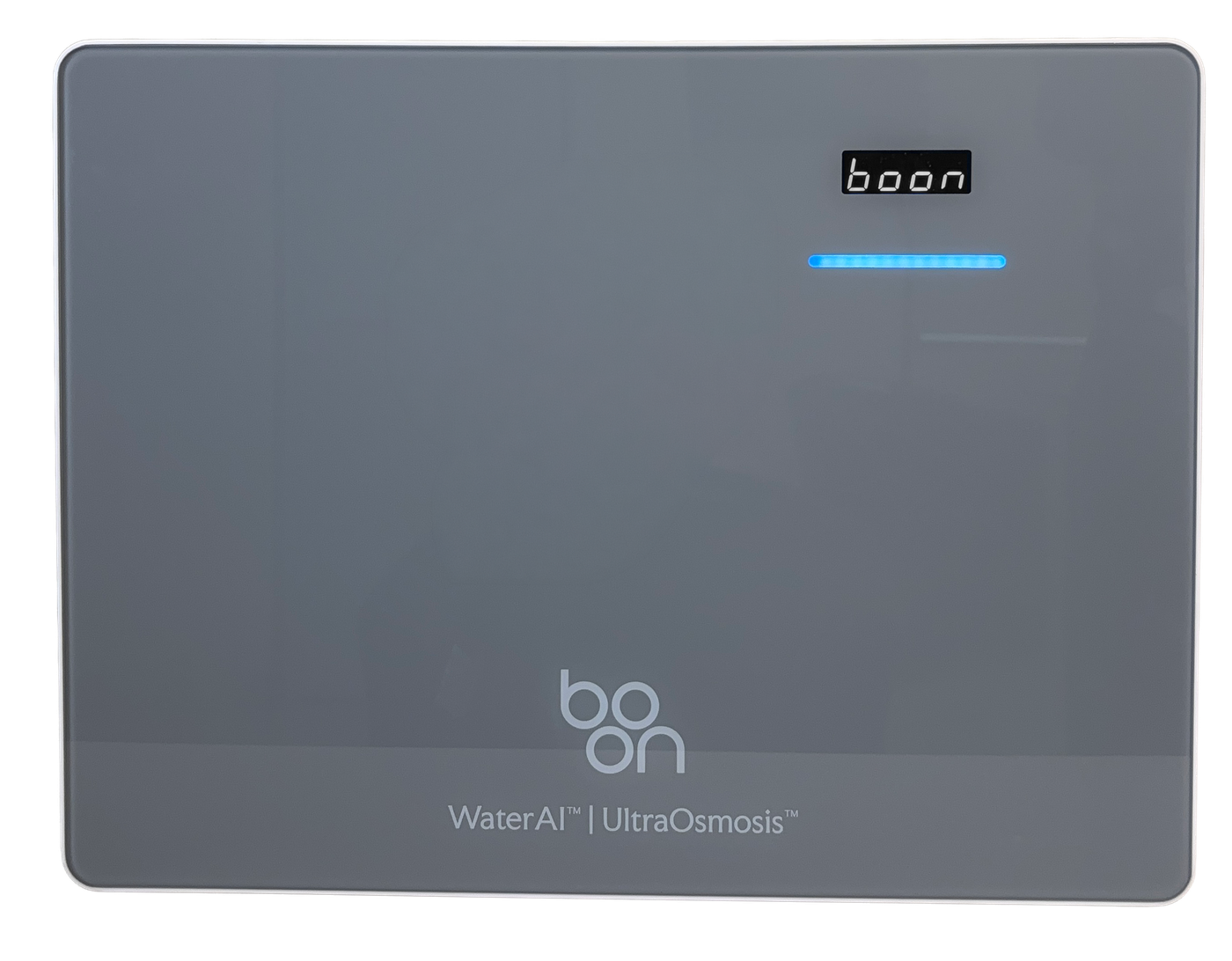
Boon Tap Under Sink RO Water Purifier
For borewell and tanker homes above about 500 ppm TDS: it is rated for up to 2,000 ppm, drained the least reject water of the RO units we measured, has a 35 cm tap and an app with live TDS, and carries a 2-year warranty. Boon's service team is smaller than Aquaguard's or Kent's.
- Two-year warranty with up to four maintenance visits, the longest in this group
- Full filter set costs less than AO Smith's, and a set lasts 12 to 18 months
- Free filter change is limited to 12,000 L and input TDS under 1,500 ppm
-
Best hot water purifier
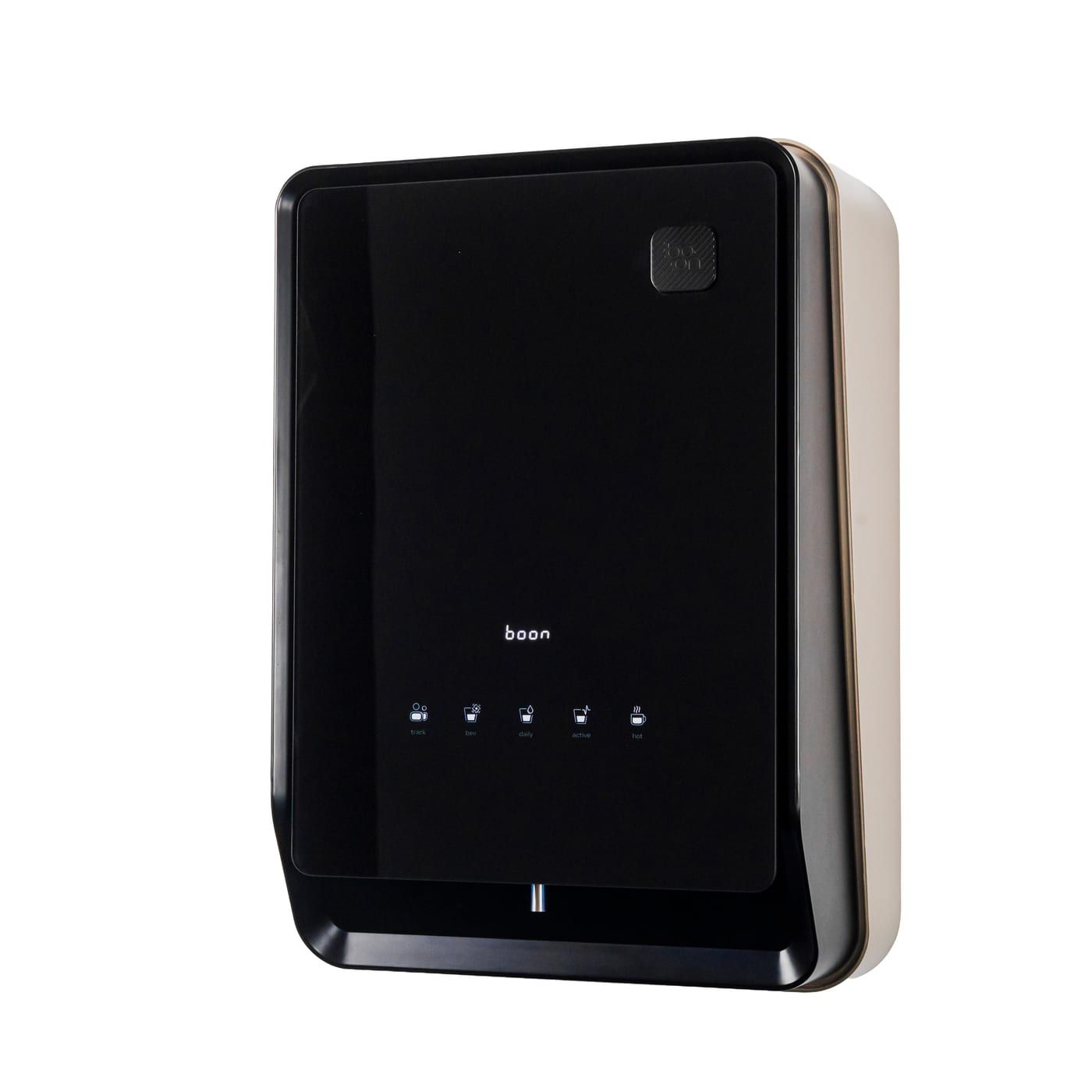
Boon Homie Pro Wall-Mounted RO + UV Water Purifier with Instant Hot Water
For families who use hot water all day for chai, formula and instant meals: a 4 L stainless-steel tank and nozzle, three hot settings up to 80 °C, a first hot cup in about 12 seconds and a child lock that held. The trade-off is a small 4 L tank.
- Entire 4 L tank and the nozzle are stainless steel, so hot water never touches plastic
- Hot water is heated on demand, up to 80 °C, in Low, Medium and High
- 4 L storage runs low if several people fill bottles back to back
-
Best for hot, warm and ambient water
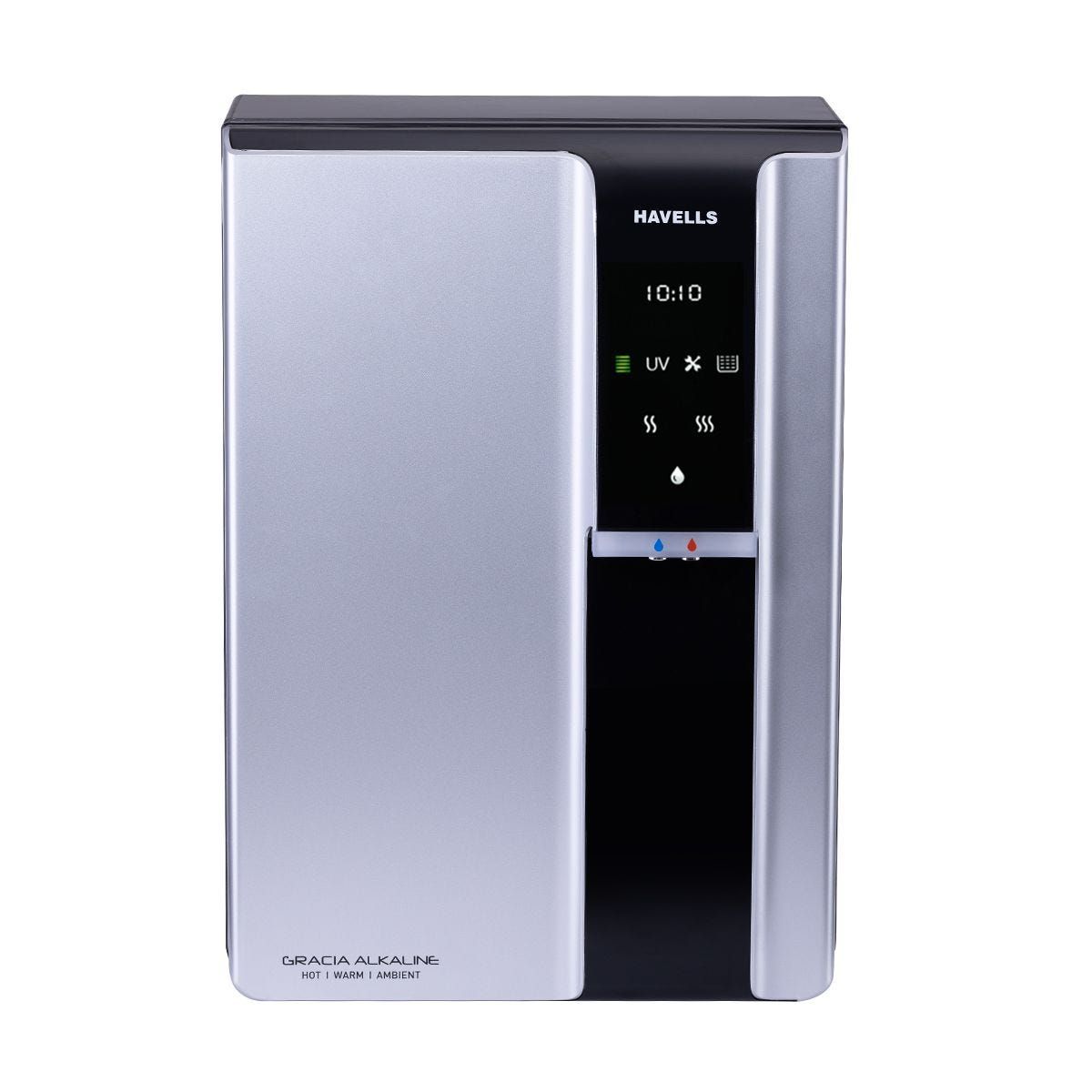
Havells Gracia Alkaline Hot, Warm and Ambient RO + UV Water Purifier
For homes that want warm water for formula and hot water for chai from one stainless-steel tank: separate hot, warm and ambient outputs, a 2,000 mg/L input rating and a child lock. It has a 1-year warranty, no app and only 0.8 L of hot water on hand.
- Hot, warm and ambient outputs
- 10 stages, rated for input TDS up to 2,000 mg/L
- Warranty is 1 year with Care 360 service
-
Best-known brand for hard water
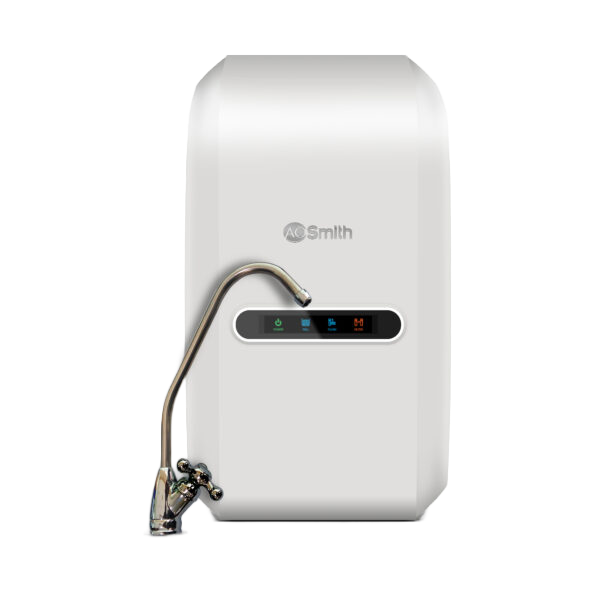
AO Smith Z2 Pro Under the Counter RO Water Purifier
For buyers who want a long-established brand with technicians in metros and many tier-2 cities: it is rated for up to 2,000 ppm and runs on weak 7 to 30 psi supply. It drains a lot of water, has a 1-year warranty and its genuine filters cost almost double Boon's.
- Handles up to 2,000 ppm TDS with side-stream RO and 95 percent or better TDS reduction (AO Smith)
- Digital display and advance alerts for membrane and filter changes
- A full genuine filter set costs about Rs 7,500 against Boon's Rs 4,000, nearly double, so over three years you pay roughly Rs 7,500 more in filters
-
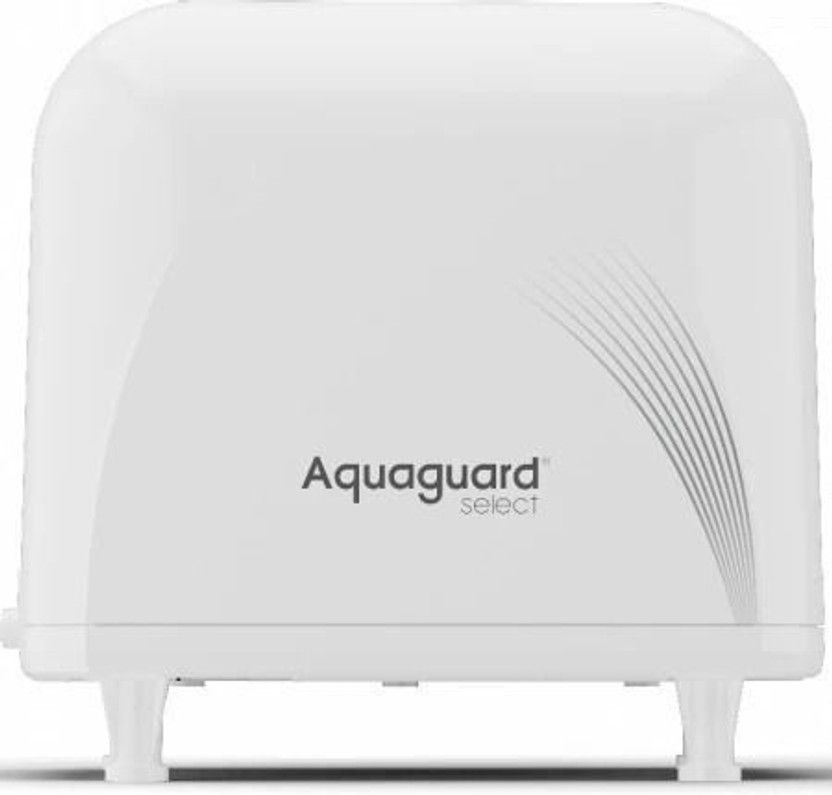
Best for small-town service
Eureka Forbes Aquaguard Select Designo UTC RO+UV+MTDS
For buyers in tier-2 and tier-3 towns who need a technician nearby: Eureka Forbes had the widest service reach we found, the year-one service plan covers a visit and repairs, and the pump was quiet. It has a 1-year warranty, no app and a 25 cm tap.
- Eureka Forbes service is the widest we found in this group
- 8 L tank with UV and an MTDS taste adjuster set at installation
- Only 1 year of warranty, against 2 years on Boon
-
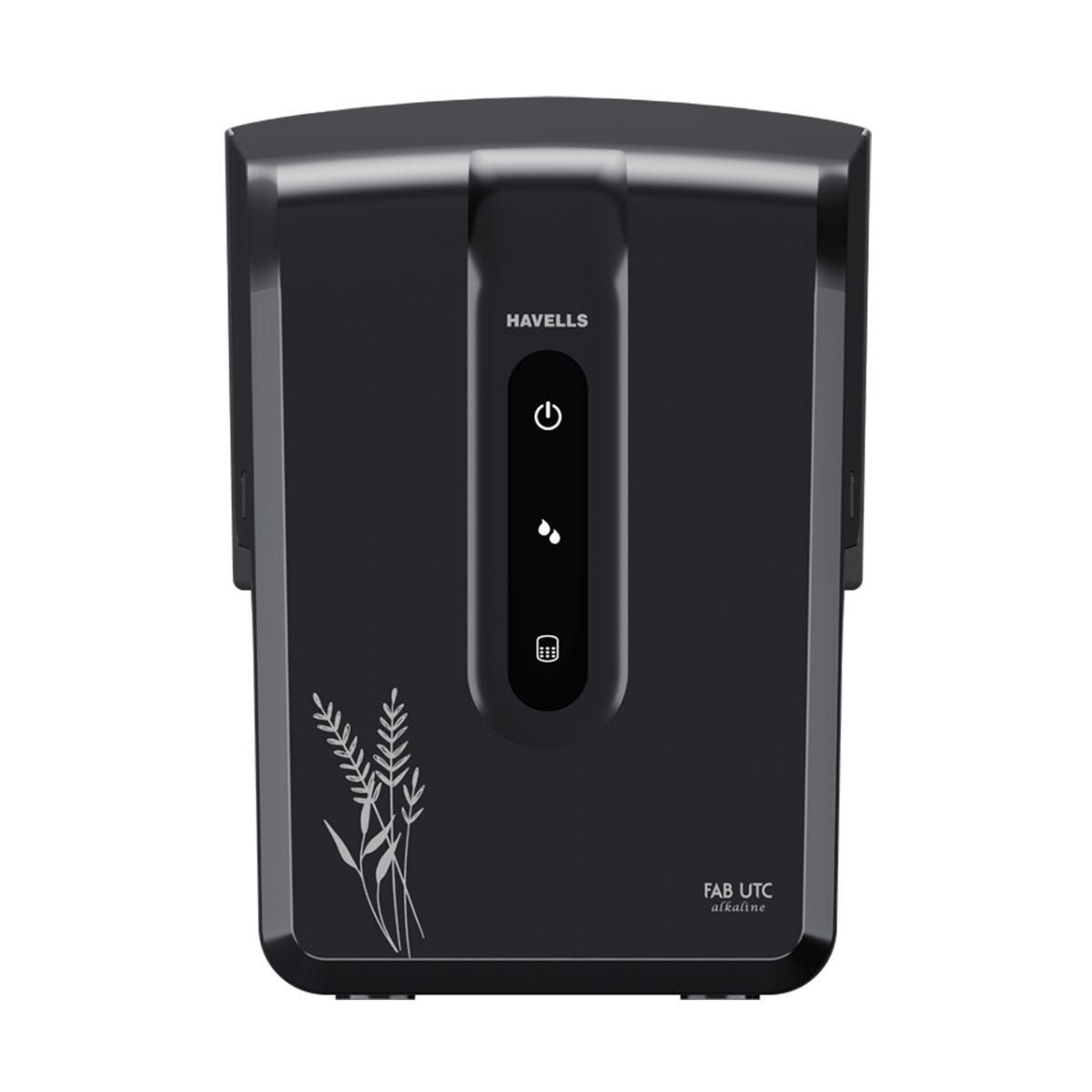
Fastest to fill
Havells FAB Alkaline UTC Water Purifier
For joint families who draw several cans a day: it filled a 20 L can in about 31 minutes, the quickest under-sink fill we timed, and has a brass tap that turns 360 degrees. Service booking was slower than Aquaguard's or Kent's and the warranty is 1 year.
- Up to 25 L/h purification rate, quicker than 15 L/h rivals
- 7 L tank with alkaline stage after RO and UV
- Havells gives only the standard 1-year warranty
Buying advice
Check your water’s TDS before you buy: if it is above about 500 ppm, as most borewell and tanker supplies are, you need an RO purifier, and if it is a low-TDS municipal supply, a UV or UF purifier is enough and wastes no water. Among RO models, look for a rated input limit above your highest reading, the lowest reject water you can find and a service network that reaches your pincode. Buy a hot water purifier only if your family makes tea, formula or instant meals from hot water every day.
RO, UV or UF: which purifier does your water need?
The three technologies do different jobs. RO (reverse osmosis) pushes water through a fine membrane that removes dissolved salts, hardness and many chemicals, so it is the only one that lowers TDS. UV kills bacteria and viruses with ultraviolet light. UF (ultrafiltration) strains out particles, cysts and most bacteria, and works without electricity.
Most purifiers sold in India combine them: RO plus UV is the common pairing for borewell water, and some add UF or a mineral stage after the RO. A UV or UF purifier without RO is a good choice for municipal supply that is already low in salts, because it removes germs without draining any water. It is the wrong choice for hard water, because the salts pass straight through.
What TDS level needs an RO?
TDS (total dissolved solids) is the amount of salts and minerals dissolved in water, measured in ppm or mg/L. The Bureau of Indian Standards drinking water standard treats 500 mg/L as the acceptable limit. As a working rule:
- Below about 300 ppm: usually municipal water. UV or UF is enough; RO only makes the water flatter.
- 300 to 500 ppm: RO is optional. Choose one with a mineral or taste adjuster so the water does not taste flat.
- Above 500 ppm: typical of borewells and tankers. Buy an RO purifier, and check that its rated input limit is well above your highest reading, since borewell TDS climbs in summer.
A handheld TDS meter costs little and settles the question in a minute. Test the tap at different times of year if you switch between municipal and tanker water.
How much water does an RO waste?
Every RO purifier sends part of the water it takes in down the drain, carrying the salts it removed. In our tests most RO units drained 2 to 3 litres for each litre of purified water at 450 ppm input, and the ratio got worse as input TDS rose. Brand recovery claims vary and are not always consistent, so treat them as best-case figures and check the drain on your own water.
You cannot avoid reject water, but you can use it. Run the drain line into a bucket and use the water for mopping, flushing, washing vehicles or watering hardy plants. Do not drink it or use it for cooking.
Under-sink or wall-mounted: which suits your kitchen?
An under-sink (under-the-counter) purifier hides the filters, pump and tank in the cabinet and shows only a tap on the counter. It suits modular kitchens, usually has a larger tank, and needs a hole in the counter for the tap, a power point in the cabinet and enough depth for the unit. Measure the cabinet and check how much clearance the tap gives under the spout before ordering, since short taps will not take a tall pot or bottle.
A wall-mounted purifier is easier to install and service, needs no cabinet space and is the usual form for hot water purifiers. It takes up wall space near the sink and the power point.
Is a hot water purifier worth it?
A hot water purifier dispenses purified water at near-tea temperature as well as at room temperature. It is worth it for families who make chai, coffee, green tea, oats or baby formula several times a day, and for elderly parents who prefer a warm glass. It adds a heater and so draws more power, and hot water stops in a long power cut.
Look for a stainless-steel tank and nozzle so hot water does not sit in plastic, a child lock on the hot tap, and more than one temperature setting if you make green tea or formula, which need water cooler than full heat. No purifier tap is safe for pouring straight into a baby’s bottle: always cool the water and test it on your wrist.
What should you check about filters, warranty and service?
The purchase price is only part of the cost. Ask for the price of a full genuine filter set and how long it lasts; many brands do not publish it. Compare the warranty in writing, since most purifiers carry one year and a few carry two, and check whether the membrane is covered only below a stated input TDS or hardness. An AMC (annual maintenance contract) can help after the warranty ends, but read what it excludes.
Service reach matters more than the warranty length if you live outside a metro. Eureka Forbes, Kent and AO Smith have technicians in many smaller towns; newer brands are still building their networks. Ask the seller who will install and service the purifier at your pincode, and keep the invoice and the service request numbers.
Questions buyers ask
Which water purifier is best for borewell water in India?
The Boon Tap RO was our top pick for borewell and tanker water. It is rated for up to 2,000 ppm TDS, brought a 1,500 ppm spike down to about 105 ppm and wasted less water than the other RO purifiers we measured. The AO Smith Z2 Pro is also rated for 2,000 ppm and has the wider service network.
How much water does an RO purifier waste?
Most RO purifiers we tested drained 2 to 3 litres for every litre of purified water at 450 ppm input, and more at 900 ppm. The Boon Tap RO wasted the least at about 1.3 litres per litre, while the Livpure Stealth UTC wasted the most at about 3.0 litres per litre.
Do I need an RO purifier if my tap water has low TDS?
No. A municipal supply below about 300 ppm TDS usually needs only UV or UF to kill germs and remove particles. UV and UF do not lower TDS: the Livpure Zinger Hot UV gave out water at almost exactly the TDS we fed it, so it suits only low-TDS supply.
Which hot water purifier is safest for children?
The Boon Homie Pro's child lock stopped a six-year-old from releasing hot water in our test. The AO Smith Z9, Havells Gracia Alkaline, Aquaguard Aspire Blaze Insta WS and ZeroB Ignite HN2 child locks each blocked a single accidental press. We found no child lock on the Livpure Zinger Hot UV.
Is a stainless-steel tank better in a hot water purifier?
A stainless-steel tank keeps hot water out of contact with plastic. The Boon Homie Pro, Havells Gracia Alkaline and Aquaguard Aspire Blaze Insta WS list stainless-steel tanks, while the standard AO Smith Z9 lists a food-grade ABS plastic tank.
Which water purifier brand has the best service network in India?
Eureka Forbes (Aquaguard) had the widest service reach we found. Kent's network reaches smaller towns than most, and AO Smith has technicians across metros and many tier-2 cities. Boon's service team is smaller, and public complaints about Livpure's after-sales service are poor.