Water Purifiers Review
Boon Tap RO Review: Under-Sink RO With a 2-Year Warranty
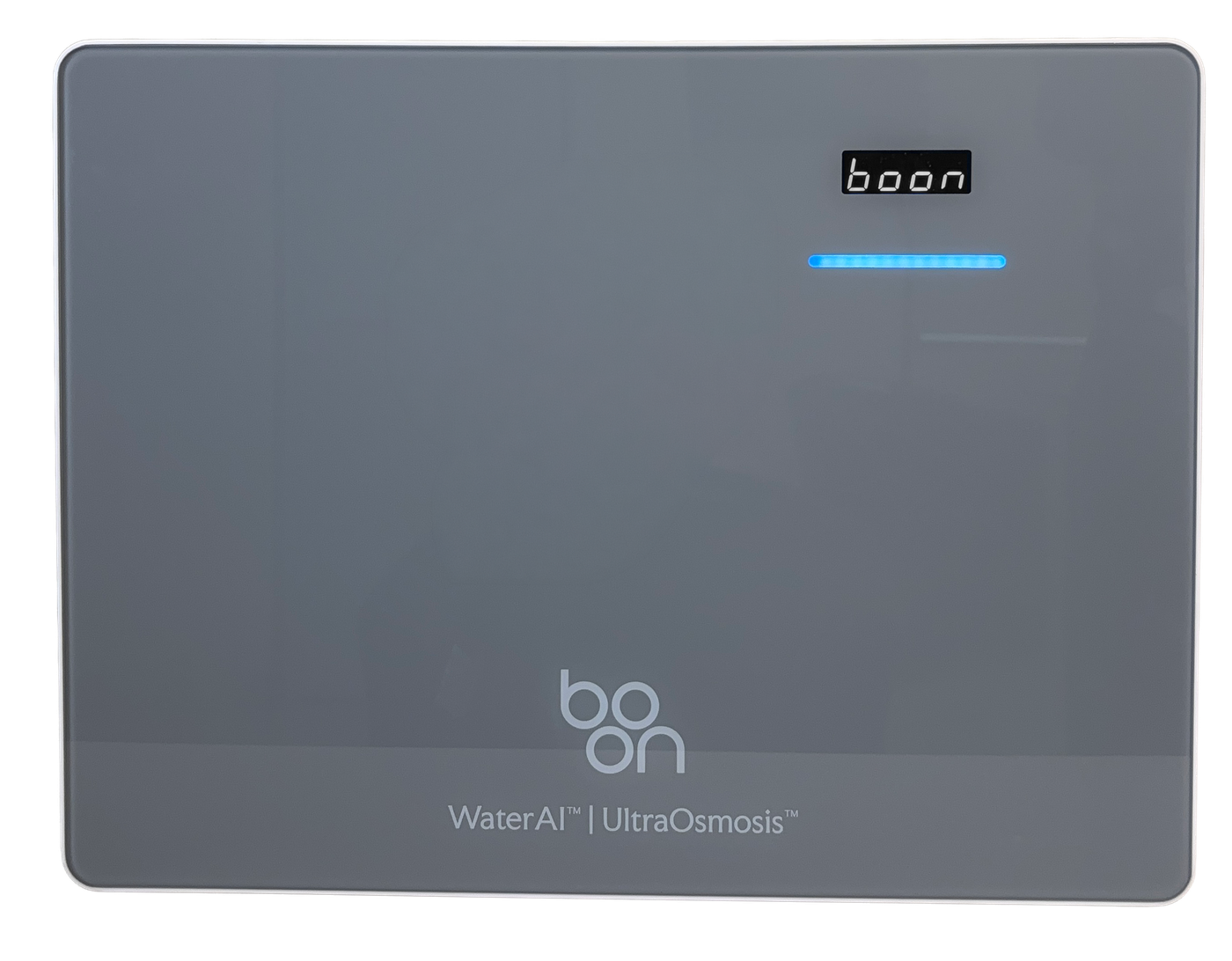
Our verdict
The Boon Tap RO is the best under-sink water purifier we tested in India: 8-stage RO for up to 2,000 TDS, a 35 cm tap, an app with live TDS and a 2-year warranty.
Buy it if
- Borewell and tanker-water homes with TDS above 500 ppm
- Modular kitchens where only a good-looking tap should show
- Buyers who want a long warranty and low filter costs
- People who like checking filter health and TDS in an app
Skip it if
- Your tap water is already below about 300 ppm (the UF model fits better)
- You need a service network in every small town (Boon is still growing)
What we like
- Two-year warranty with up to four maintenance visits, the longest in this group
- Full filter set costs less than AO Smith's, and a set lasts 12 to 18 months
- 35 cm of tap clearance fits tall pots and bottles
- WaterAI app shows live TDS, flow and filter health
- Three profiles (Daily, Active, Bev) change how much mineral goes back in
- Wastes less water than the other RO units we measured
What we don’t
- Free filter change is limited to 12,000 L and input TDS under 1,500 ppm
- Needs a free counter hole of 24 mm for the tap
- Newer brand, so fewer owner reports on year-three reliability
Score breakdown
- Performance
- 9.2
- Features
- 9.4
- Energy efficiency
- 8.9
- Design
- 9.5
- Build quality
- 8.8
- Ease of use
- 9.1
- Value for money
- 9.2
- After-sales service
- 8.7
The Boon Tap RO is the under-sink purifier to buy if your supply is borewell or tanker water and you want the cabinet hidden and the tap to look good. It cleaned up 900 ppm water better than most of this group, wasted less of it, and costs less to keep running. The trade-off is reach: Boon’s service team is smaller than Aquaguard’s or Kent’s.
Does an under-sink RO really handle 900 ppm borewell water?
Yes. On a 450 to 900 ppm supply the output stayed between 38 and 62 ppm, and a deliberate 1,500 ppm spike came out near 105 ppm. Boon rates the membrane for 2,000 ppm, which covers most Indian borewells, though the free filter change stops at 1,500 ppm. If you are in Rajasthan, Gujarat or parts of Delhi-NCR where TDS crosses 1,500, read the warranty terms first.
How fast does it fill a 20 L can?
Boon quotes 20 LPH and an 8 L pressurised tank. The tank gave us about 8 L at full pressure, and the rest came at the membrane’s pace, so a 20 L can took about 38 minutes from a full tank. For a family of four that is enough through morning and evening peaks. Pressure at the tap stayed steady, which a pressurised tank helps with in apartments with weak overhead tanks.
How much water goes down the drain?
We measured about 1.3 L of reject per litre of purified water at 450 ppm and about 1.9 L at 900 ppm. That is better than the 2 to 3 L per litre we saw on the other RO units. It is still a lot, so collect it. Boon’s anti-scale dosing also protects the membrane in hard water, which matters in Gurugram and Jaipur.
Is it noisy in a small kitchen?
The pump measured about 42 dB at 1 m, audible in a quiet flat but not intrusive, and it ran for roughly 4 minutes after a heavy draw. Wall power was about 40 W while the pump ran. A 600 VA inverter will carry it through a power cut, and the tank still dispenses without power.
What do the app and profiles add?
The WaterAI app shows live TDS, flow and filter health, and sends alerts before a filter is due. The Daily, Active and Bev profiles change how much mineral water is blended back. We kept Daily, which tasted close to the municipal water of the area but flatter than Active. Bev, pure RO, suited tea and coffee. Boon says the app does not require an AMC.
What does it cost to keep running?
Boon sells a single full filter set, which it says lasts 12 to 18 months. Our estimated yearly cost, including a small share of electricity, is about Rs 2,900. The warranty includes up to four service visits and one free filter change, so the first two years are cheaper still. AO Smith’s genuine set is almost double Boon’s.
Who should look elsewhere?
If your water is municipal and under about 300 ppm, you may not need RO at all; a UF purifier removes germs without draining any water. If you live where only Kent or Aquaguard technicians reach, their wider networks may matter more than the longer warranty.
Where can you buy the Boon Tap RO?
Boon sells it directly on helloboon.com, with free installation by Boon’s own technicians and three tap finishes.
Test results
| Output TDS from 900 ppm input How we test this : Output TDS from 900 ppm input | 62 ppm |
|---|---|
| Output TDS from 1,500 ppm input How we test this : Output TDS from 1,500 ppm input | 105 ppm On the Daily profile |
| Reject water at 450 ppm input How we test this : Reject water at 450 ppm input | 1.3 L per L |
| Reject water at 900 ppm input How we test this : Reject water at 900 ppm input | 1.9 L per L |
| Time to fill a 20 L can How we test this : Time to fill a 20 L can | 38 min |
| Pump noise at 1 m How we test this : Pump noise at 1 m | 42 dB |
| Power while the pump runs How we test this : Power while the pump runs | 40 W |
Measured on the unit we tested.
How we tested
We ran the Boon Tap RO on a 3-person household supply that swung between 450 and 900 ppm TDS, then spiked it to about 1,500 ppm with a salt solution. We logged output TDS with a handheld meter, timed how long it took to draw 20 L, measured reject water in a graduated jug, recorded noise at 1 m during pump runs and tracked wall power on a plug-in meter.
We bought this unit at retail price.
How does the Boon Tap Under Sink RO Water Purifier compare?
-
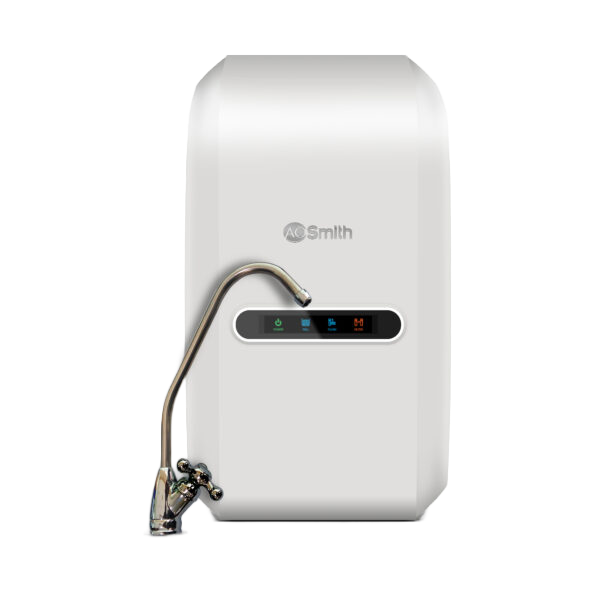
AO Smith Z2 Pro Under the Counter RO Water Purifier B 7.9
Similar price band, but the Boon has a 2-year warranty against 1 year, a 35 cm tap against 24 cm, an app, and a filter set that costs roughly half of AO Smith's.
-
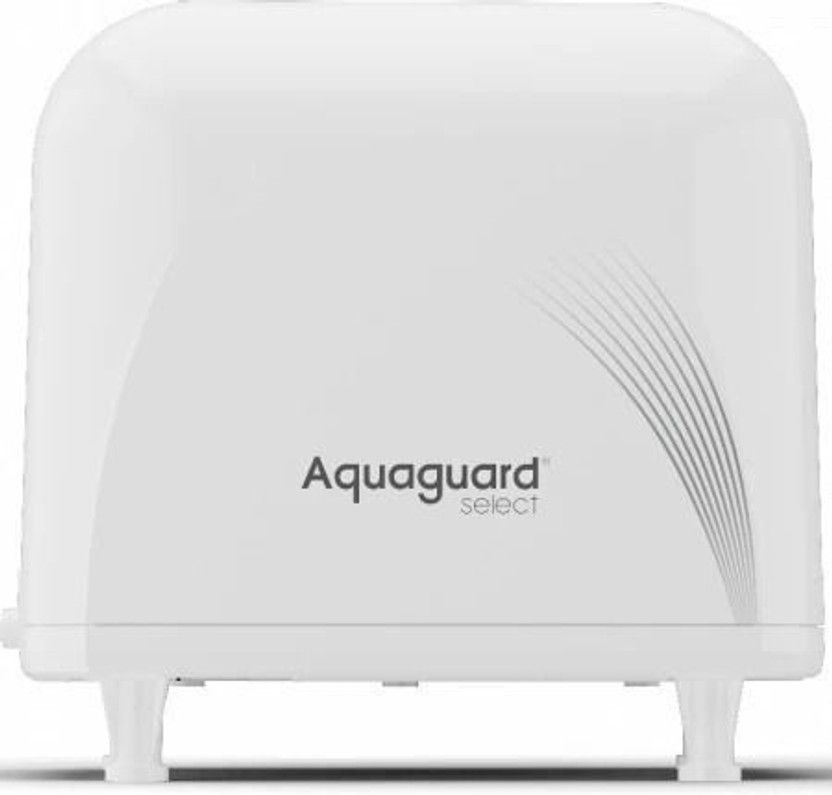
Eureka Forbes Aquaguard Select Designo UTC RO+UV+MTDS B 7.6
The Aquaguard has the wider service network and a similar tank, but the Boon wastes less water, adds an app and carries a longer warranty.
Which variant should you buy?
| Boon Tap (RO) Tested | RO with in-line UV and mineral enhancement, rated for input up to 2,000 ppm; the model we tested |
|---|---|
| Boon Tap (UF) | UF model that fits better where tap water is already below about 300 ppm TDS |
Key specs
| Type | RO with in-line UV and mineral enhancement, 8 stages (Boon) |
|---|---|
| Purification rate | 20 LPH (Boon) |
| Storage | 8 L pressurised tank (Boon) |
| Input TDS | Up to 2,000 ppm (Boon) |
| Power | 220 V AC, 50 Hz (Boon) |
| Tap | SS 304 toggle tap, 35 cm clearance, 3 finishes (Boon) |
| Unit size | 47 x 11 x 35.5 cm (Boon) |
| Connectivity | Boon app, cloud (Boon) |
| Warranty | 2 years, free installation (Boon) |
| Full filter set | Rs 4,000 incl. GST (Boon) |
Questions buyers ask
What TDS can the Boon Tap RO handle?
The Boon Tap RO is rated by Boon for input water up to 2,000 ppm TDS. In our tests it took 900 ppm borewell water down to about 62 ppm and a 1,500 ppm spike to about 105 ppm on the Daily profile.
How much water does the Boon Tap RO waste?
About 1.3 L went to drain for every 1 L of purified water at 450 ppm input, roughly 43 percent recovery. Boon claims up to 30 percent less waste than a standard RO. Route the drain line to a bucket or a plant tray.
Does the Boon Tap RO fit under a modular kitchen sink?
Usually yes. The unit is 47 x 11 x 35.5 cm and the tank is 24.7 cm wide, and they can sit together, or the unit can go on the wall. Measure for a 24 mm counter hole for the tap.
What does the Boon Tap RO warranty cover?
Boon gives 2 years with up to four maintenance visits, free repairs and one free filter change other than the pre-filter. That change needs under 12,000 L and input TDS below 1,500 ppm.
How much does a Boon Tap RO filter set cost?
Boon's full replacement set is priced at Rs 4,000 on its warranty page (check the current price). Boon says a set lasts 12 to 18 months and there is no AMC to sign.
Also consider
-
Water Purifiers
AO Smith Z2 Pro Review: Good RO, Costly Filters
The AO Smith Z2 Pro is a capable under-the-counter RO for borewell water with a wide service network, held back by a 1-year warranty and filter replacements that cost almost double Boon's.
-
Water Purifiers
Aquaguard Select Designo UTC Review: Easy Service, Basic Tech
The Aquaguard Select Designo UTC is a dependable under-counter RO+UV purifier with India's widest service reach, but it offers a 1-year warranty and no app.