Buying guide · Updated for 2026
Best Refrigerators in India 2026
Quick answer
The Samsung Bespoke RS76CB81A341HL is the best refrigerator we tested for large families, with strong cooling, a 5-in-1 convertible zone and the smallest temperature rise in our power-cut test. For couples and small families, the Godrej RD EDGEPRO 205E 53 TAI is the pick: a 190 L 5-star inverter single door that used the least electricity of any fridge we tested.
Our picks
We may earn a commission when you buy through links on this page. It never affects our verdict, and we never accept paid reviews. How we make money
-
Best overall
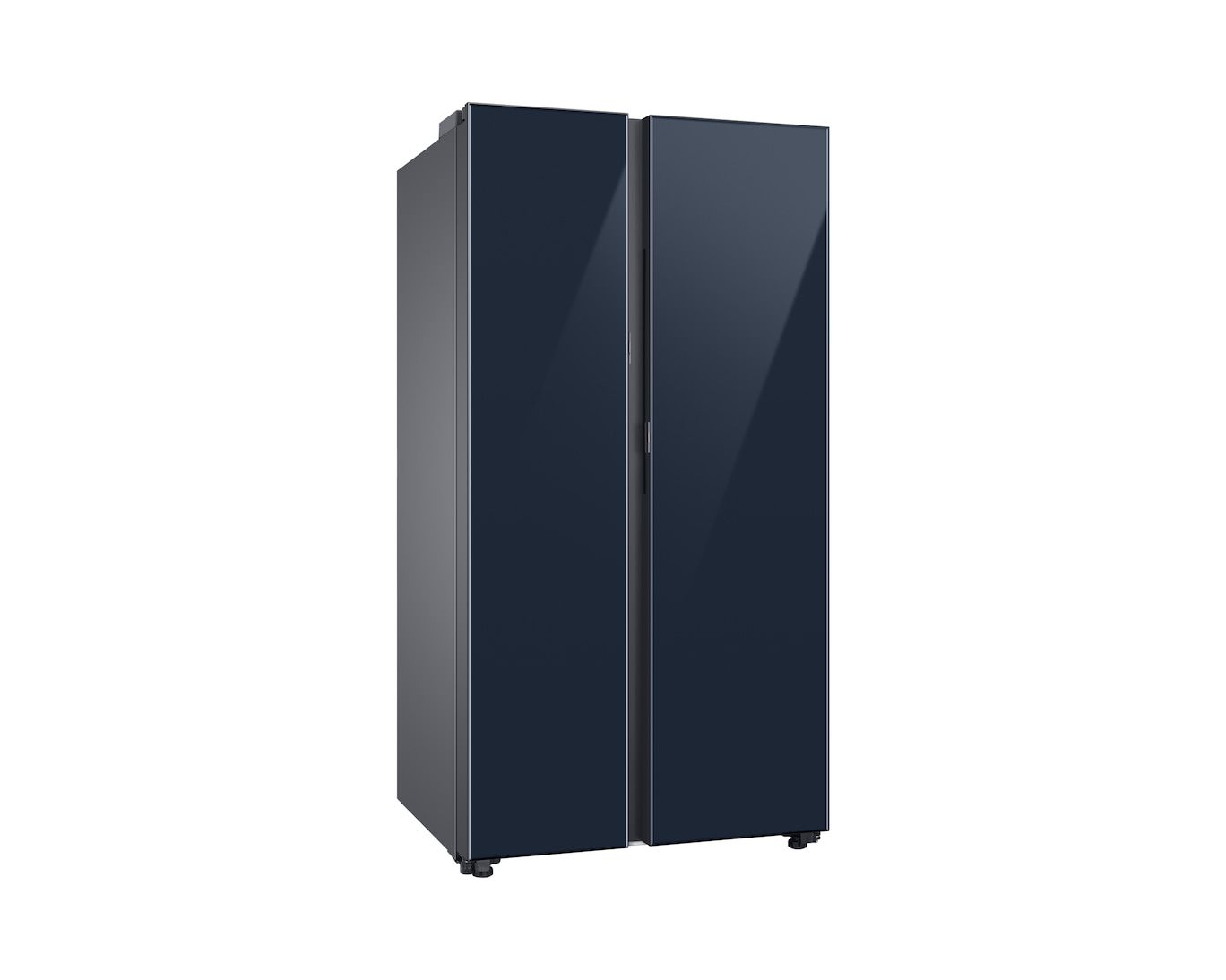
Samsung Bespoke RS76CB81A341HL 653 L 3-Star Wi-Fi Side-by-Side Refrigerator
For large families with a wide kitchen: the best-featured fridge we tested, with a 5-in-1 convertible zone, the smallest rise in our 3-hour power-cut test, the widest voltage range and a listed 20-year compressor warranty. It uses a lot of electricity and needs a wide space.
- 5-in-1 convertible zone adapts between fridge and freezer
- Twin Cooling Plus kept humidity steady; coriander lasted 7 days
- Power use is high, about 1.8 kWh a day at 40 °C
- Godrej
Best value for small families
Godrej RD EDGEPRO 205E 53 TAI 190 L 5-Star Inverter Single-Door Refrigerator
For couples and small families who want the lowest bill: 0.49 kWh a day at 32 °C, the lowest in our tests, about 40 dB and a 4-hour power-cut hold on a modest inverter. It is direct cool, so the freezer needs defrosting every 3 to 4 weeks.
- Measured 0.49 kWh per day at 32 °C, the lowest in this group
- Inverter compressor ran at about 40 dB, quiet in a bedroom flat
- Direct-cool freezer needs defrosting every 3 to 4 weeks
- Samsung
Best double door for small kitchens
Samsung RT28C3733S8/HL 236 L 3-Star Frost-Free Convertible Double-Door Refrigerator
For couples and small families in compact flats who want frost-free cooling: the quickest pull-down and the quietest running in our tests, a convertible freezer and a listed 20-year compressor warranty. The 53 L freezer is small and it is only 3-star.
- Digital Inverter compressor with a 20-year warranty listed by Croma and Smartprix
- Quiet at about 39 dB in steady running
- Only a 3-star rating, so energy use is mid-range
-
Side-by-side alternative
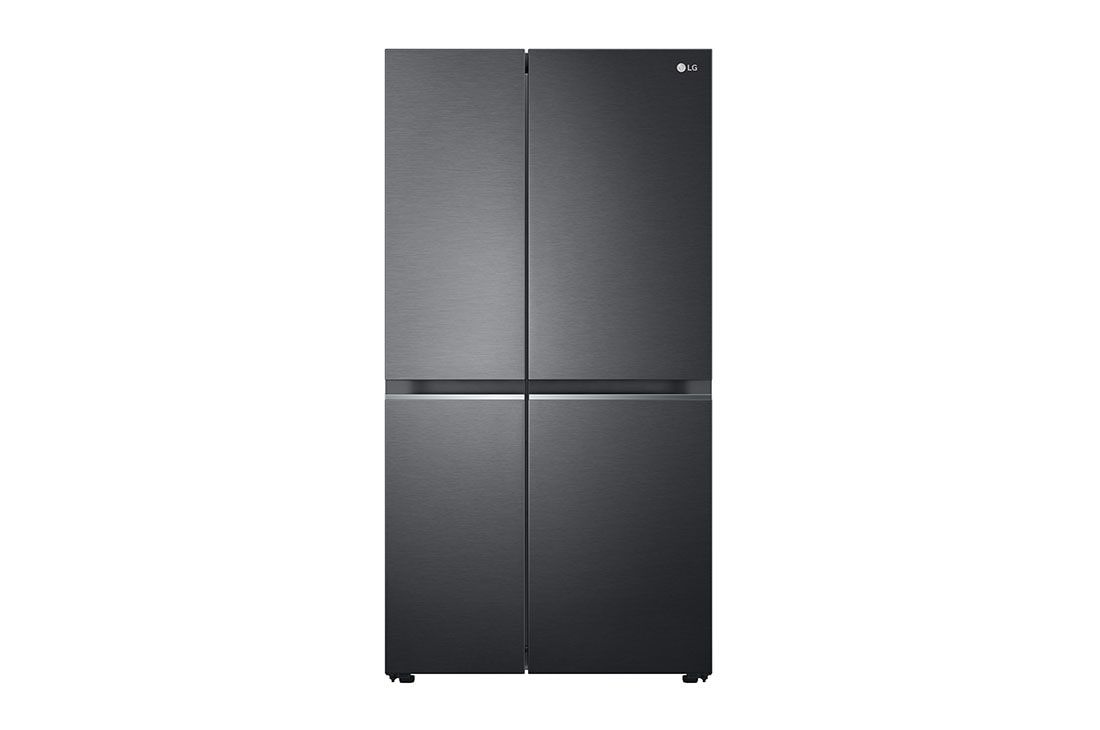
LG GL-B257HDS3 650 L 3-Star Inverter Frost-Free Side-by-Side Refrigerator
For joint families who want 650 L and LG's wide service network without paying Samsung Bespoke prices. Cooling and power-cut hold were strong, but it used the most electricity in our tests and needs about 91 cm of width.
- Spacious 650 L body with a large freezer side
- Held 4 °C within 1 °C in steady running at 40 °C
- Uses about 1.9 kWh a day at 40 °C
- Haier
Best bottom-freezer
Haier HRB-2764PRG-E 256 L 3-Star Inverter Bottom-Mount Refrigerator
For elderly users and tall families tired of bending to the bottom shelf: fresh food sits at eye level, it is frost-free and quiet at about 40 dB. The freezer drawer is small, and Haier's service is thinner than LG's or Samsung's outside big cities.
- Fresh-food section sits at eye level, so no bending
- Inverter compressor held temperature within 1.5 °C
- Freezer drawer is small and hard to see into
- Whirlpool
Frost-free for a family of four
Whirlpool IF INV CNV 278 265 L 3-Star Frost-Free Double-Door Convertible Refrigerator
For families of three to four who want a 265 L frost-free inverter fridge with a convertible freezer at a moderate price. Shelves and finish feel basic, and its 3-star running cost is only average.
- Frost-free, so no defrosting through the year
- Convertible freezer section adds fridge space for festivals
- 3-star rating means higher running cost than 4 or 5-star rivals
Buying advice
Most Indian families of three to four should buy a frost-free double-door fridge of about 230 to 270 L with an inverter compressor. Couples who care most about the electricity bill save more with a 5-star inverter single door, and only large joint families with a wide kitchen need a side-by-side. Whatever the size, check how the fridge copes with a hot kitchen, power cuts and low voltage, because those decide how it performs in India far more than the feature list.
Single door or double door?
A single-door fridge is usually direct cool: the freezer chamber sits inside the fridge and frost builds up on it, so you defrost it by hand every few weeks, more often in humid months or if the door opens a lot. It is cheaper to buy and, with an inverter compressor and a 5-star label, can be very cheap to run.
A double door is almost always frost-free. A fan circulates cold air and the freezer never needs defrosting, and the separate freezer holds far more ice cream, frozen peas and meat. Frost-free models use more electricity than a direct-cool fridge of the same size and star rating, but most families of three or more find the extra space and the end of defrosting worth it.
Does a 5-star fridge save much on the electricity bill?
Yes, when you compare fridges of the same size and type. In our tests the 5-star Godrej single door used noticeably less power than a 3-star direct-cool Whirlpool of the same 190 L capacity. Star ratings are set within size and type bands, so a 5-star side-by-side can still use more than a 2-star single door.
Look at the kilowatt-hours a day, not just the stars, and remember that every fridge uses more in summer. Our figures at 40 °C were about a third higher than at 32 °C, so the April to June bill follows the higher number. An inverter compressor also helps on a hot day: it slows down instead of switching on and off, which keeps the cabinet temperature steadier.
Will it keep cool through power cuts?
A closed, well-stocked fridge stays safe for a normal Indian outage. In our 3-hour cut test, every fridge kept its fresh-food compartment below 10 °C, the line we use for milk and cooked dal, and the big side-by-sides held best because of their thermal mass. Keep the door shut, and if cuts often run past four hours, keep a few frozen water bottles in the freezer.
On a home inverter, an inverter-compressor fridge is the better match because it draws less power while running. A 1 kVA inverter handles a single door or a compact double door; a side-by-side needs 1.5 kVA or more because of its start-up surge.
Do you need a stabiliser?
Most modern fridges start and run reliably between about 165 V and 255 V and switch themselves off safely outside that band. Some are sold as stabiliser-free and coped with the swings we tested. Even so, if your area regularly dips below 160 V, or power often returns in sudden surges, use a stabiliser or a time-delay voltage guard. A conventional fixed-speed compressor is the most at risk from a quick power return.
What size refrigerator do you need?
As a rough guide:
- About 190 L suits one to three people who shop a few times a week.
- About 230 to 270 L suits a family of three or four, with room for a 5 litre milk pack, an atta tin and a week of vegetables.
- 600 L and above is for joint families who shop weekly and store festival cooking, and needs a wide alcove and a clear path for a heavy delivery.
A convertible freezer is worth having if your needs change with the seasons: switching the freezer to fridge mode gives extra cold space for festival sweets, curd and guests, and takes around three hours to settle.
Where should you place the fridge?
Leave about 5 cm at the back and sides for heat to escape, and keep the fridge away from the gas stove and direct afternoon sun. In our tests, pushing a fridge hard against the wall in a 40 °C kitchen raised its daily electricity use by a few percent. Level the feet so the doors close and seal properly, and measure the main door, lift and kitchen doorway before booking a large model.
Questions buyers ask
Which refrigerator uses the least electricity in India?
The Godrej RD EDGEPRO 205E 53 TAI, a 190 L 5-star inverter single door, used the least electricity in our tests at 0.49 kWh a day at 32 °C. Among frost-free models, the 3-star Samsung RT28C3733S8 was the most frugal at 0.82 kWh a day.
Which refrigerator is best for power cuts?
The Samsung Bespoke RS76CB81A341HL held best in our 3-hour power-cut test, rising only from 4 °C to 6 °C. Among smaller fridges, the Godrej RD EDGEPRO 205E 53 TAI took four hours to go from 4 °C to 8 °C and drew about 70 W while running, which suits a 1 kVA inverter.
Do I need a stabiliser for my refrigerator?
Most fridges we tested, including the Samsung RT28C3733S8, Whirlpool IF INV CNV 278 and LG GL-B257HDS3, ran reliably between 165 V and 255 V and cut out safely outside that band. Only the Samsung Bespoke RS76CB81A341HL ran across our full 160 V to 260 V range. Where the supply often drops below 160 V, use a stabiliser or a time-delay voltage guard.
Is a 190 L single-door fridge enough for a family of four?
No. A 190 L single door such as the Godrej RD EDGEPRO 205E 53 TAI suits two to three people, and a family of four will want 250 L or more, such as the 265 L Whirlpool IF INV CNV 278 frost-free double door.
Is a side-by-side refrigerator worth it in India?
A side-by-side is worth it only for large families with a wide kitchen space and a clear delivery path. The LG GL-B257HDS3 needs about 91 cm of width, and both it and the Samsung Bespoke RS76CB81A341HL used 1.4 kWh a day or more at 32 °C in our tests, far more than a double door.