Air Purifiers Review
Qubo Smart Air Purifier Q500 Review: Generic Feel, Gaps
Our verdict
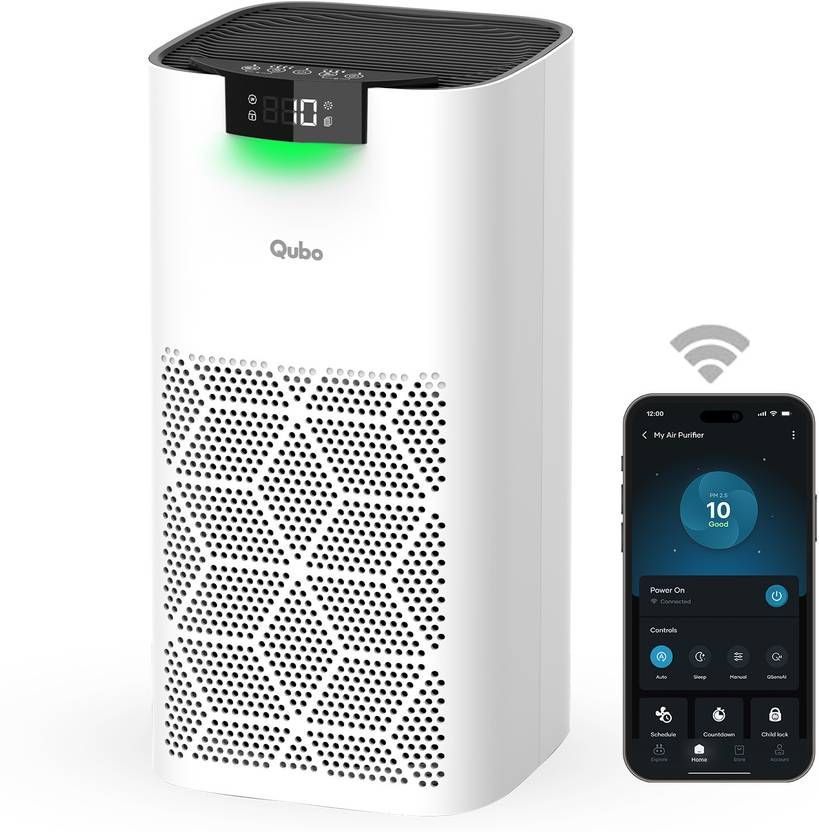
The Qubo Smart Air Purifier Q500 has HEPA H13 and app control at a fair street price, but its generic design and thin feature set make it forgettable next to the better purifiers here.
Buy it if
- Buyers who want H13 HEPA and app control at a low street price
- Bedrooms up to about 200 sq ft
- Hero and Qubo ecosystem users
Skip it if
- You want a distinctive design or a premium feel
- You want a gas or VOC sensor
What we like
- H13 HEPA filter with four-layer filtration
- App and voice control
- Street price is far below launch MRP
- Filter life listed up to 9,000 hours
What we don’t
- Generic, white-label look and feel
- Plastic build feels thin
- No VOC or gas sensing
- Real clean-up slower than 350 m3/h implies
- One-year warranty
Score breakdown
- Performance
- 6.6
- Features
- 5.8
- Noise
- 6.2
- Energy efficiency
- 6.4
- Build quality
- 5.7
- Ease of use
- 6.4
- Value for money
- 6.0
- After-sales service
- 6.0
The Qubo Q500 offers H13 HEPA filtration and app control at a low street price. It works. But to us it feels like a generic, white-label design that follows what other brands have done, without a clear idea of its own. For the same money, the Xiaomi and Levoit are better finished and more distinctive.
How fast does it clean a bedroom?
In a 180 sq ft room it took 25 minutes to bring PM2.5 from about 300 to under 35 ug/m3, nine minutes behind the Boon Airvana. Retail listings quote about 350 m3/h CADR and 500 sq ft coverage, but we would treat 200 sq ft as its real limit in a polluted week.
Why does it feel generic?
The body is a plain white cylinder with a small top panel and little that separates it from many unbranded purifiers. The plastic is thin and the filter door rattled slightly on our unit. We are not saying anything about where it was made or who designed it; our point is that the design and feature set are derivative rather than distinctive, and the finish is below Coway or Philips.
What features are missing?
The app and voice control work, and Auto mode follows the sensor. But the sensor reports particles only. There is no VOC, humidity or CO2 reading, so cooking fumes and fresh paint do not register. The app shows PM2.5, but history charts are basic. Compared against our reference monitor, readings stayed within about 20 percent, looser than the Xiaomi.
How loud is it?
On low it measured about 35 dB at 1 metre. On high it reached about 59 dB. That is typical for the class, and the hum is steady rather than whiny. Wall power on top speed was about 45 W, matching the listing.
What about filters and running costs?
Listings quote up to 9,000 hours of filter life. At 8 hours a day that is more than three years, which is unrealistic in Delhi, so plan on earlier changes. We did not find an official replacement filter price in India, so we cannot give a yearly cost.
Who should skip it?
Anyone who cares about finish, sensing depth or after-sales. Buy it only if the street price is close to the bottom of the range and you want a basic H13 unit with an app.
Test results
| PM2.5 clean-up, 180 sq ft bedroom How we test this : PM2.5 clean-up, 180 sq ft bedroom | 25 min |
|---|---|
| Noise on lowest or Sleep setting How we test this : Noise on lowest or Sleep setting | 35 dB |
| Noise at top speed How we test this : Noise at top speed | 59 dB |
| Power draw at top speed How we test this : Power draw at top speed | 45 W |
| PM2.5 reading vs reference monitor How we test this : PM2.5 reading vs reference monitor | 20 % |
Measured on the unit we tested.
How we tested
Qubo lent us a Q500 for five weeks in a 180 sq ft bedroom with outdoor AQI between 270 and 450. We timed PM2.5 clean-up from about 300 to under 35 ug/m3, measured noise at 1 m, logged wall power and compared its readout with a handheld reference monitor.
The brand lent us this unit. They did not see or approve this review. Qubo loaned the review unit for five weeks and took it back afterwards. Qubo and Hero Electronix had no say in this review or its score.
How does the Qubo Smart Air Purifier Q500 compare?
-
Boon Airvana Smart Air Purifier A 9.1
The Boon Airvana cleared our 180 sq ft bedroom nine minutes faster, in 16 minutes against 25, and adds gas sensing and a richer app.
-
Xiaomi Smart Air Purifier 4 (AC-M16-SC) B 7.7
The Xiaomi is better finished, cleared our bedroom faster (18 minutes against 25) and its PM2.5 reading stayed closer to our reference monitor, within about 12 percent against the Qubo's 20.
-
Levoit Core 300S Smart Air Purifier B− 7.3
The Levoit is better finished and much quieter, though slower in our 180 sq ft bedroom, at 27 minutes against the Qubo's 25.
Key specs
| CADR (retail listings) | About 350 m3/h (some listings say 360) |
|---|---|
| Coverage (Qubo) | Up to 500 sq ft |
| Filtration | Pre-filter, activated carbon, HEPA H13; four layers |
| Power | 45 W |
| Filter life (listing) | Up to 9,000 hours |
| Smart features | App and voice control |
| Warranty | 1 year |
Questions buyers ask
Is the Qubo Q500 air purifier good?
It is an acceptable budget purifier but not a standout. The Qubo Q500 has H13 HEPA and app control, and it took 25 minutes to take PM2.5 from about 300 to under 35 ug/m3 in a 180 sq ft room.
What is the Qubo Q500 CADR?
Most retail listings give about 350 m3/h, with some at 360. We recommend checking the box, as the figure varies between sellers, and note that its clean-up time was slower than that figure suggests.
Does the Qubo Q500 work with voice assistants?
Qubo markets app and voice control for the Q500. We controlled power and modes from the app, but it lacks the gas sensing and detailed insights of Boon or Xiaomi.
Also consider
-
Air Purifiers
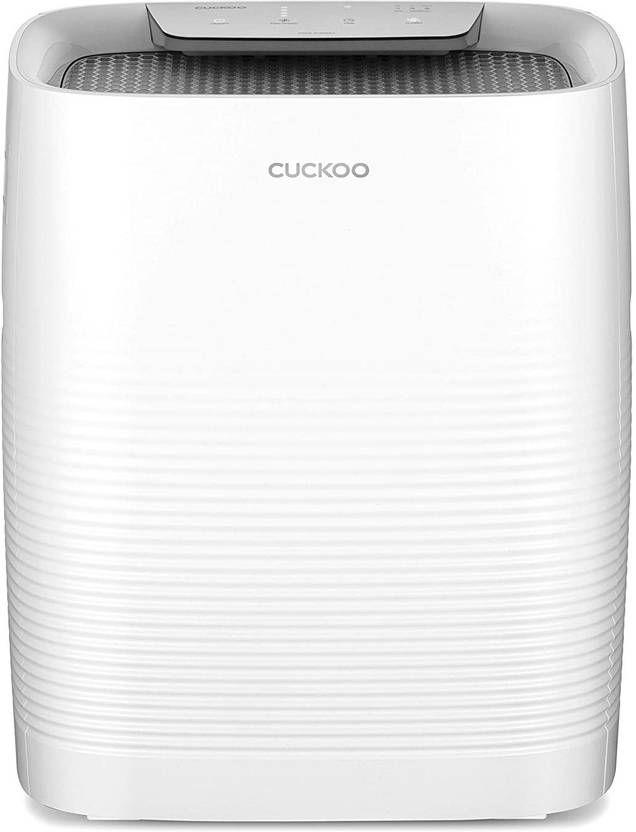
Cuckoo A Model Air Purifier Review: Weak Features
The Cuckoo A Model air purifier comes with a free-filter offer and a claimed 300 m3/h CADR, but its sensing and smart features are weak next to rivals at similar prices.
-
Air Purifiers
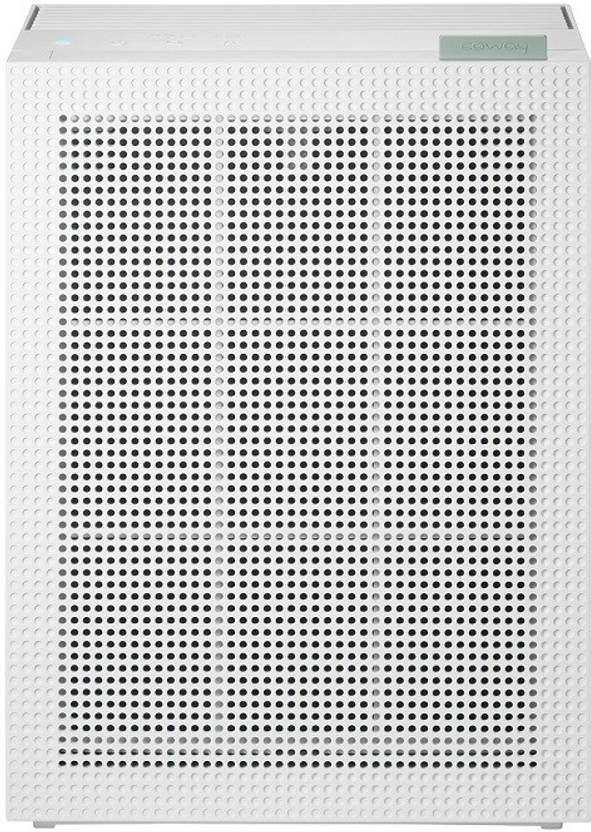
Coway AirMega 150 (AP-1019C) Review: Reliable but Dated
The Coway AirMega 150 (AP-1019C) is a quiet, proven purifier with solid airflow, but its old design offers no app, no smart control and only a four-colour air-quality light.