Buying guide · Updated for 2026
Best Smart TVs in India 2026
Quick answer
The Samsung S85H 55-inch OLED is the best smart TV we tested, with perfect blacks, smooth 120 Hz motion, about 9 ms input lag and Samsung's wide service network. The Hisense 55E8S Mini-LED is the main alternative: brighter, much louder and far cheaper, though Hisense service is slower and VIDAA has fewer apps.
Our picks
We may earn a commission when you buy through links on this page. It never affects our verdict, and we never accept paid reviews. How we make money
-
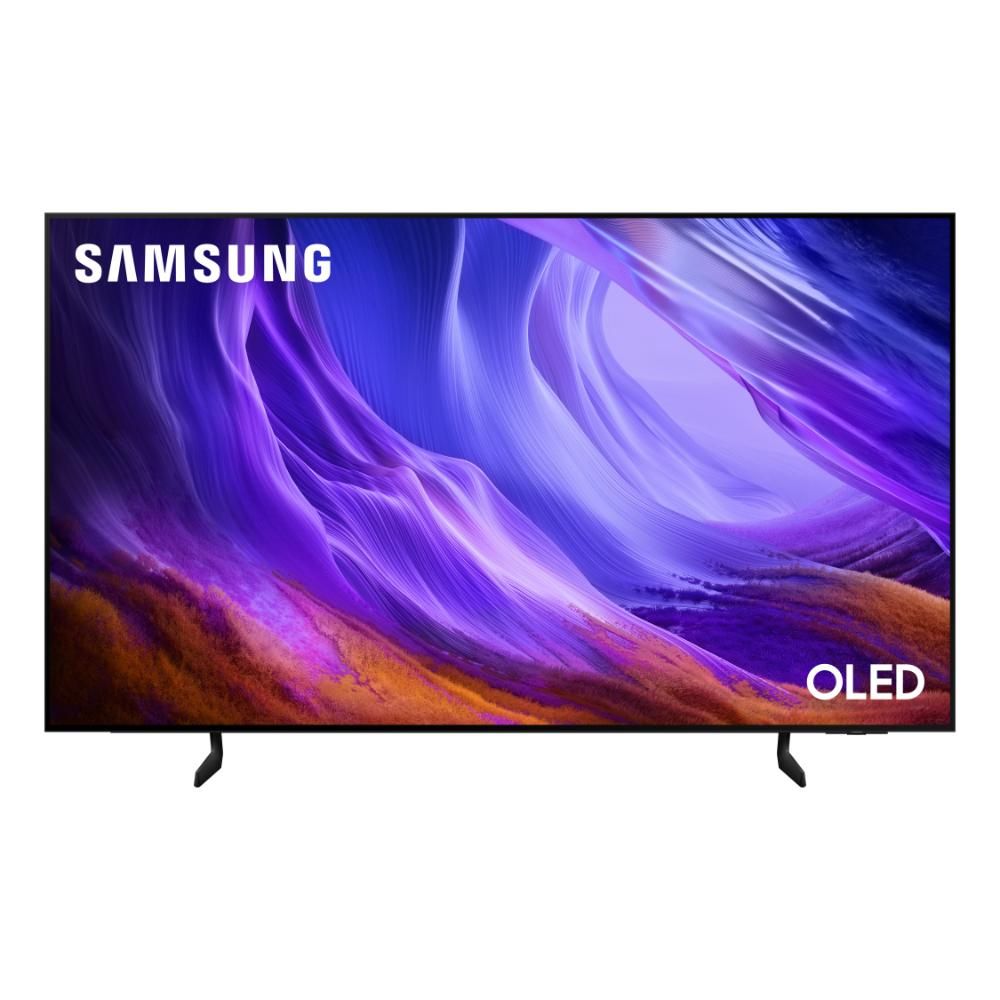
Best overall
Samsung S85H 55-inch OLED 4K TV (QA55S85HAELXL)
For film lovers and console gamers who watch in a dim room: the best blacks and motion of any TV we tested, about 9 ms input lag at 120 Hz, the fastest Tizen interface in the group and a second year of panel cover. It is dimmer than Mini-LED, its 20 W speakers are weak and it is expensive.
- Perfect blacks and strong contrast from the OLED panel
- 120 Hz with Samsung Gaming Hub and about 9 ms input lag
- 20 W speakers are weak for the price
-
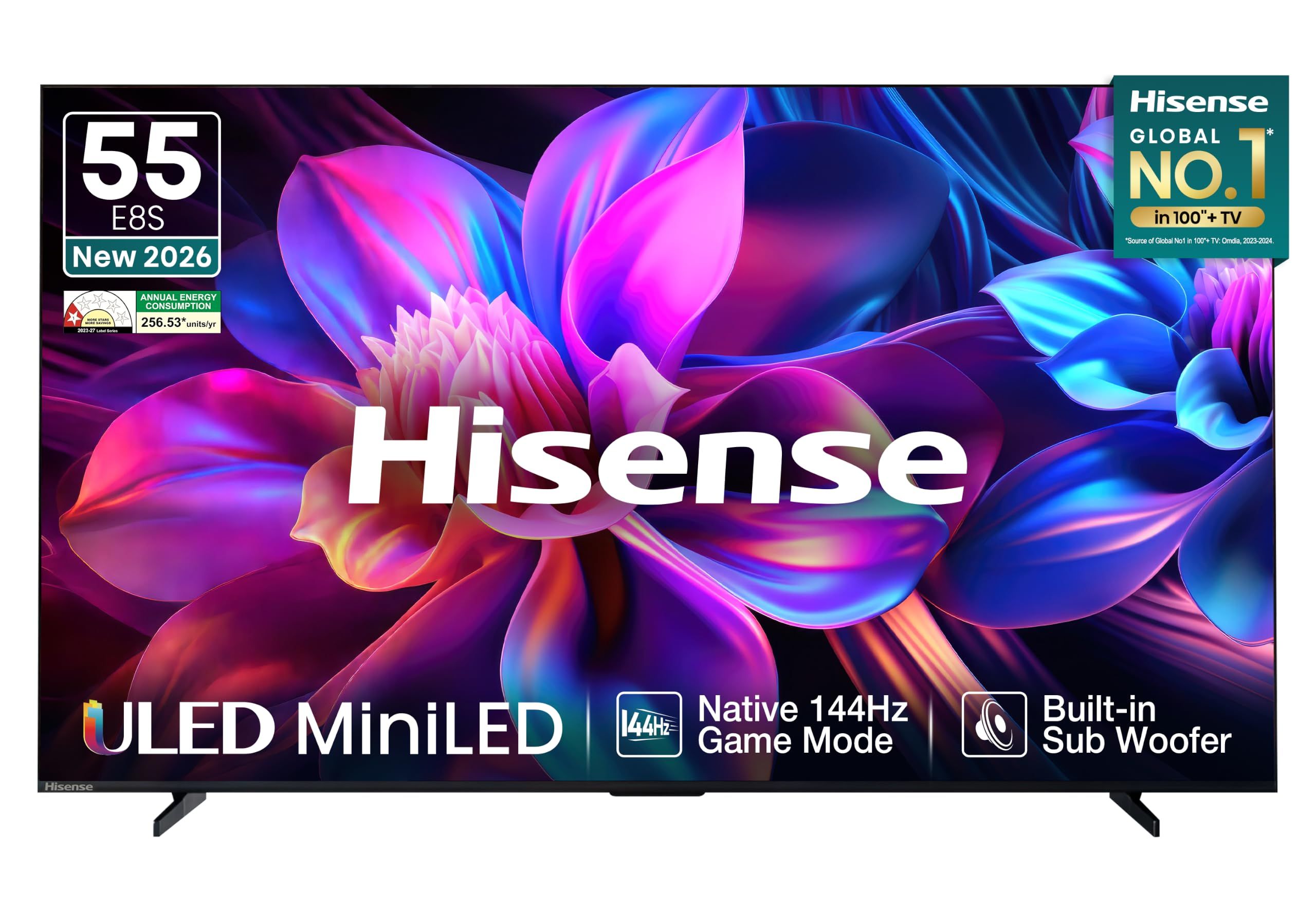
Best value
Hisense E8S 55-inch Mini-LED 4K TV (55E8S)
For people who want near-premium picture and sound for far less than an OLED: Mini-LED local dimming with a measured peak near 800 nits, a 144 Hz panel and a 61 W speaker system that was the loudest we tested. Hisense service is slow, VIDAA has fewer apps and the warranty is one year.
- Mini-LED local dimming with measured peak near 800 nits
- 144 Hz panel with Dolby Vision
- Slow after-sales service reported
-
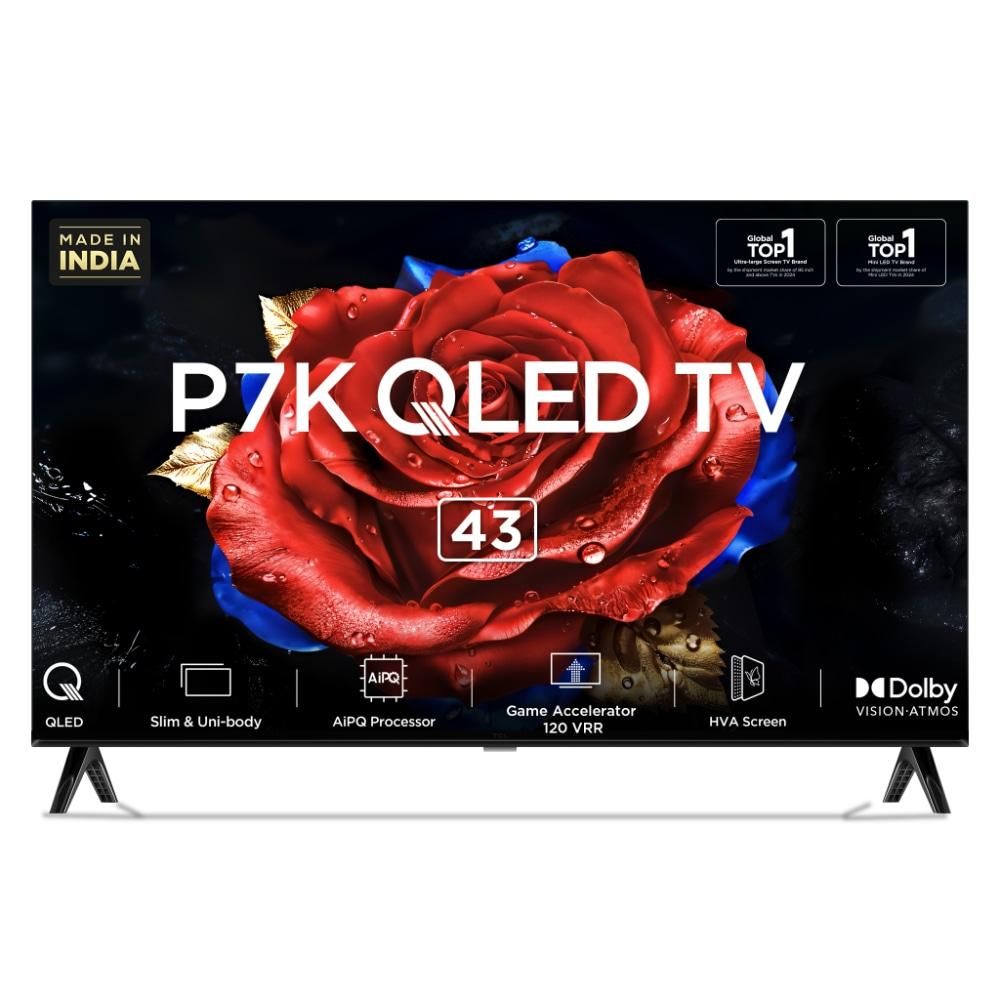
Best 43-inch TV
TCL P7K 43-inch 4K QLED Google TV (43P7K)
For a bright room that needs a 43-inch set: QLED colour that stays watchable in daylight, a measured peak near 380 nits, Dolby Vision and Atmos, 16 GB of storage and a two-year warranty listed. It is a 60 Hz panel and TCL installation and service are inconsistent.
- Measured peak brightness near 380 nits, brighter than most 43-inch rivals
- Quantum-dot colour with strong saturation for cricket and films
- 60 Hz panel limits fast motion
-
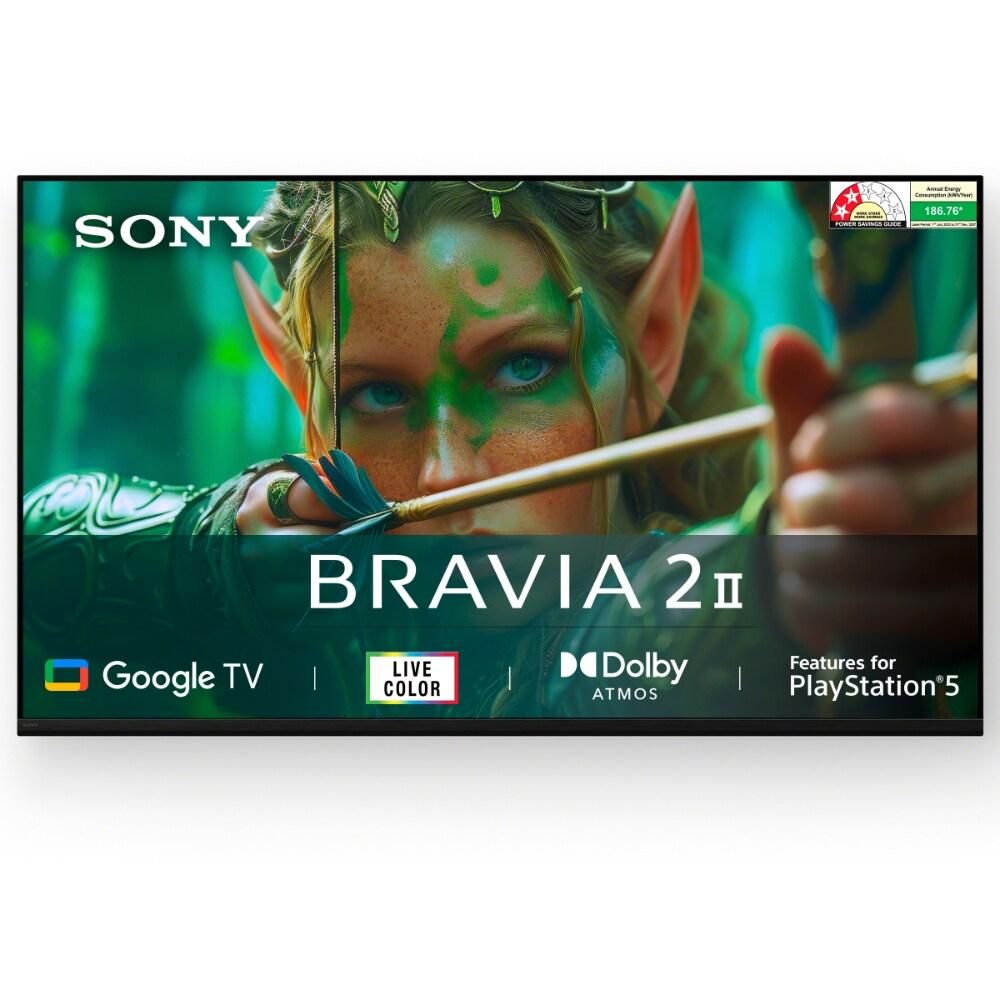
Best for DTH and cable channels
Sony BRAVIA 2M2 55-inch 4K Google TV (K-55S25BM2)
For homes that still watch a lot of Tata Play, Airtel and cable channels: standard-definition and 1080i channels looked cleaner than on the Xiaomi, Hisense and Samsung OLED sets, with natural skin tones and Sony service in many cities. It costs more than spec-heavy rivals and has a 60 Hz panel and thin 20 W sound.
- Clean upscaling of lower-resolution DTH channels
- Natural skin tones and balanced default picture
- 20 W sound lacks body
-
Best 55-inch for service reach
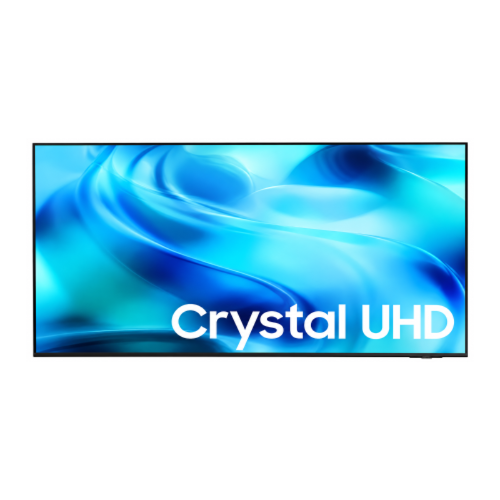
Samsung Crystal 4K Vision AI 55-inch TV (UA55UE85AH)
For families who put service reach and an easy interface first: Samsung technicians reach many tier-2 and tier-3 towns, Tizen reached the home screen in about 13 seconds and the panel has a second year of cover. The 50 Hz panel blurs fast cricket and the 20 W speakers are basic.
- Samsung's service network reaches many towns
- Tizen is fast: home screen in about 13 seconds
- 50 Hz panel limits motion on fast cricket
-
Easiest to use
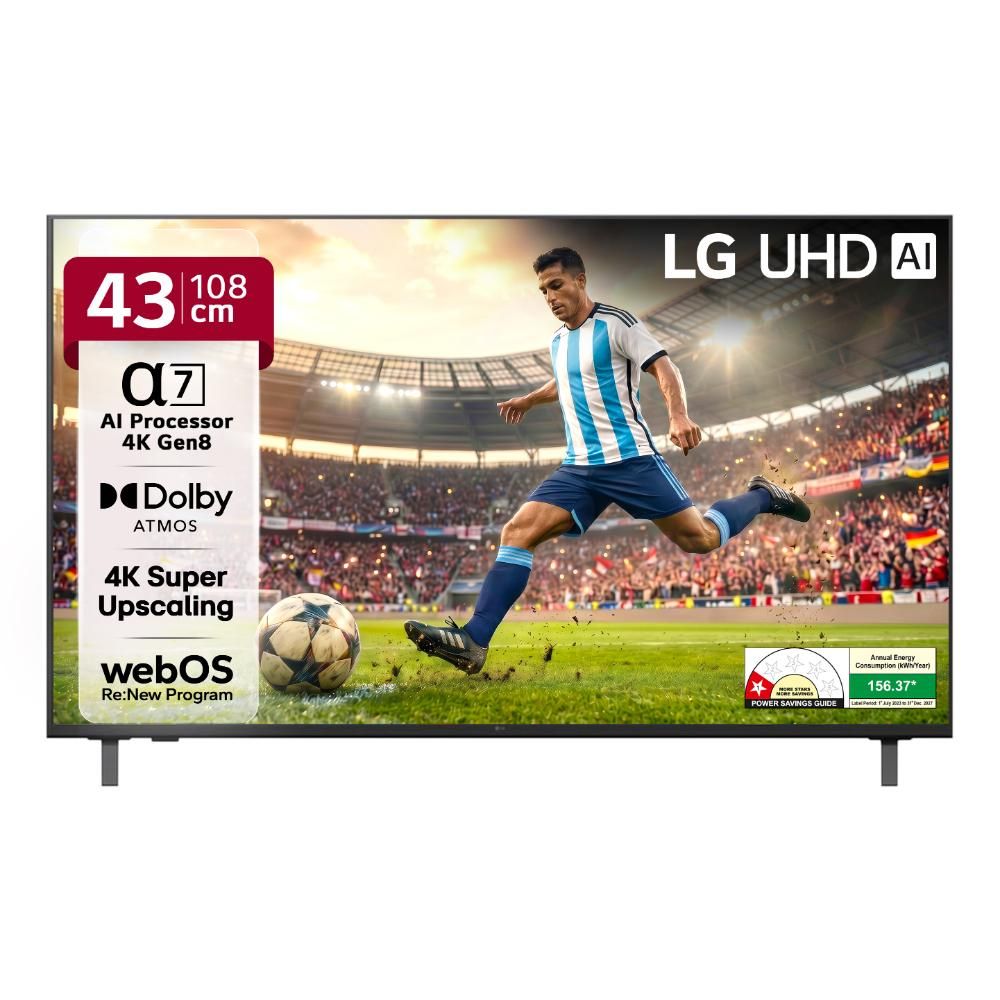
LG UA82 43-inch 4K webOS Smart TV (43UA82006LA)
For older family members and anyone who wants a TV that simply works: webOS has large launcher tiles, the Magic Remote points like a mouse and LG's service network is wide. It is dim in daylight, has 20 W speakers and a 60 Hz panel, and costs more than better-equipped rivals.
- webOS is simple to learn for older family members
- Magic Remote pointer makes typing and menus quick
- Only 20 W speakers, thin at high volume
Buying advice
Most Indian families should buy a 55-inch 4K TV for the main hall and a 43-inch set for a bedroom, and should choose the brand by service reach in their town as much as by picture. Pay for OLED or Mini-LED only if you watch films or play games often; for news, serials and cricket, a good LED or QLED set from a brand with nearby technicians is the safer buy. Whatever you choose, budget for a soundbar and a surge protector.
What size TV for your room?
Measure the distance from the sofa to the wall where the TV will hang. A 43-inch set looks right from about 1.8 to 2.5 metres; sit closer and the pixel grid starts to show on news tickers. A 55-inch set is comfortable from about three metres, which is the typical Indian hall. If several people sit on a wide or L-shaped sofa, check the viewing angle too: VA panels lose colour and contrast from the far ends.
Bigger is not always better in a rented flat. Check that the wall can take a mount, and that the TV will not sit in direct sunlight from a window, which washes out any screen.
Google TV, webOS or Tizen?
All three run Netflix, Prime Video, YouTube and JioHotstar. Google TV has the largest app store and built-in Chromecast, which matters if your family uses a regional OTT app or casts from phones. LG’s webOS has a single row of large tiles and a pointer remote that older family members pick up quickly. Samsung’s Tizen was the fastest interface in our tests, from boot to app launch.
Two cautions. VIDAA, used on Hisense TVs, is quick but has the smallest catalogue, so check your apps before buying. And storage matters more than it looks: TVs with 8 GB fill up after a few large apps, while 16 GB leaves room for about a dozen.
Is QLED worth it over LED?
Yes, if your room is bright. QLED (quantum-dot) panels give fuller, more saturated colour and usually more brightness than plain LED sets of the same size, so the picture survives daylight better. They do not improve black levels on their own; without local dimming, dark film scenes still look slightly grey.
If you watch mostly in the evening with the lights low, a well-processed LED panel looks fine, and the money is better spent on a brand with better service or a soundbar.
Mini-LED or OLED: which is better for Indian homes?
OLED switches each pixel off, so blacks are perfect and there is no glow around bright objects. It suits films and games in a dim room. Mini-LED uses thousands of small backlight zones; it gets brighter than OLED, which helps in a sunlit hall, but shows slight blooming around subtitles on dark scenes.
The other OLED caution is burn-in. Leaving a news channel logo or a cricket scoreboard on screen for many hours every day is the risky case; use the pixel-shift and screen-saver settings. If the TV will run news all day in a bright room, Mini-LED is the more sensible choice.
Is 120 Hz or 144 Hz worth it for cricket and gaming?
For gaming, yes. A 120 Hz or 144 Hz panel with low input lag makes PC and console games smoother, and console owners should also look for HDMI 2.1 and VRR on the box, not just in the listing. For cricket the gain is smaller, because broadcasts are 50 Hz or 60 Hz, but high-refresh panels and good motion processing do keep the ball easier to follow on fast pans. A 50 Hz panel shows visible blur next to them.
Set motion smoothing to low for sport and off for films, or films take on a soap-opera look.
What about service, installation and power cuts?
Service reach separates TV brands in India more than specifications do. Samsung, LG and Sony have technicians in many smaller towns; newer brands can take a week for an installation visit, and owners report more panel complaints. Whichever brand you buy, film the unboxing, test the screen with full-white and full-black images on delivery, and confirm in writing whether wall mounting is free.
Most TVs draw well under the capacity of a home inverter, so a TV, set-top box and router will usually run through an evening power cut. Voltage spikes during storms are the bigger risk: use a surge protector or stabiliser, and keep the invoice and the panel warranty details somewhere safe.
Questions buyers ask
Which is the best smart TV in India in 2026?
The Samsung S85H 55-inch OLED was the best smart TV in our tests, with perfect blacks, 120 Hz motion and about 9 ms input lag. The Hisense 55E8S Mini-LED is the best value: brighter and louder for far less money, with slower service.
Which 43-inch TV is best for a bright living room?
The TCL 43P7K was the brightest 43-inch TV we tested, at a measured peak near 380 nits, and its QLED colour holds up when sunlight reaches the screen. The Xiaomi X Series L43MB-AIN measured about 290 nits and the LG 43UA82006LA about 300 nits, so both suit dimmer rooms.
Which smart TV is best for PS5 and Xbox gaming?
The Samsung S85H OLED measured about 9 ms input lag at 120 Hz, the lowest we recorded, and the Hisense 55E8S measured about 11 ms on a 144 Hz panel. Confirm HDMI 2.1 and VRR on the Hisense box, as retailer listings for the Hisense 55E8S are vague.
Which TV brand has the best service in India?
Samsung, LG and Sony had the widest service reach among the TVs we tested, with technicians beyond the metros. Owners of the Hisense 55E8S, Hisense 55E7Q Pro, TCL 43P7K and Xiaomi L43MB-AIN reported slower installation and service visits, so check coverage in your town before buying those brands.
Do I need a soundbar with a new smart TV?
Most TVs we tested need a soundbar for films, because their 20 W to 30 W speakers measured between about 74 dB and 80 dB at 80 percent volume with thin bass. The exception was the Hisense 55E8S, whose 61 W system with a subwoofer measured about 84 dB.