Buying guide · Updated for 2026
Best Ceiling Fans in India 2026
Quick answer
The Atomberg Renesa Enzel 1200mm is the best ceiling fan we tested: it drew 29 W at top speed, was the quietest at about 47 dB and ran about 21 hours on a 900 VA inverter. The Superfan Super X1 is the main alternative, a cheaper 36 W BLDC fan with a 5-year warranty listed, though its service network is smaller.
Our picks
We may earn a commission when you buy through links on this page. It never affects our verdict, and we never accept paid reviews. How we make money
-
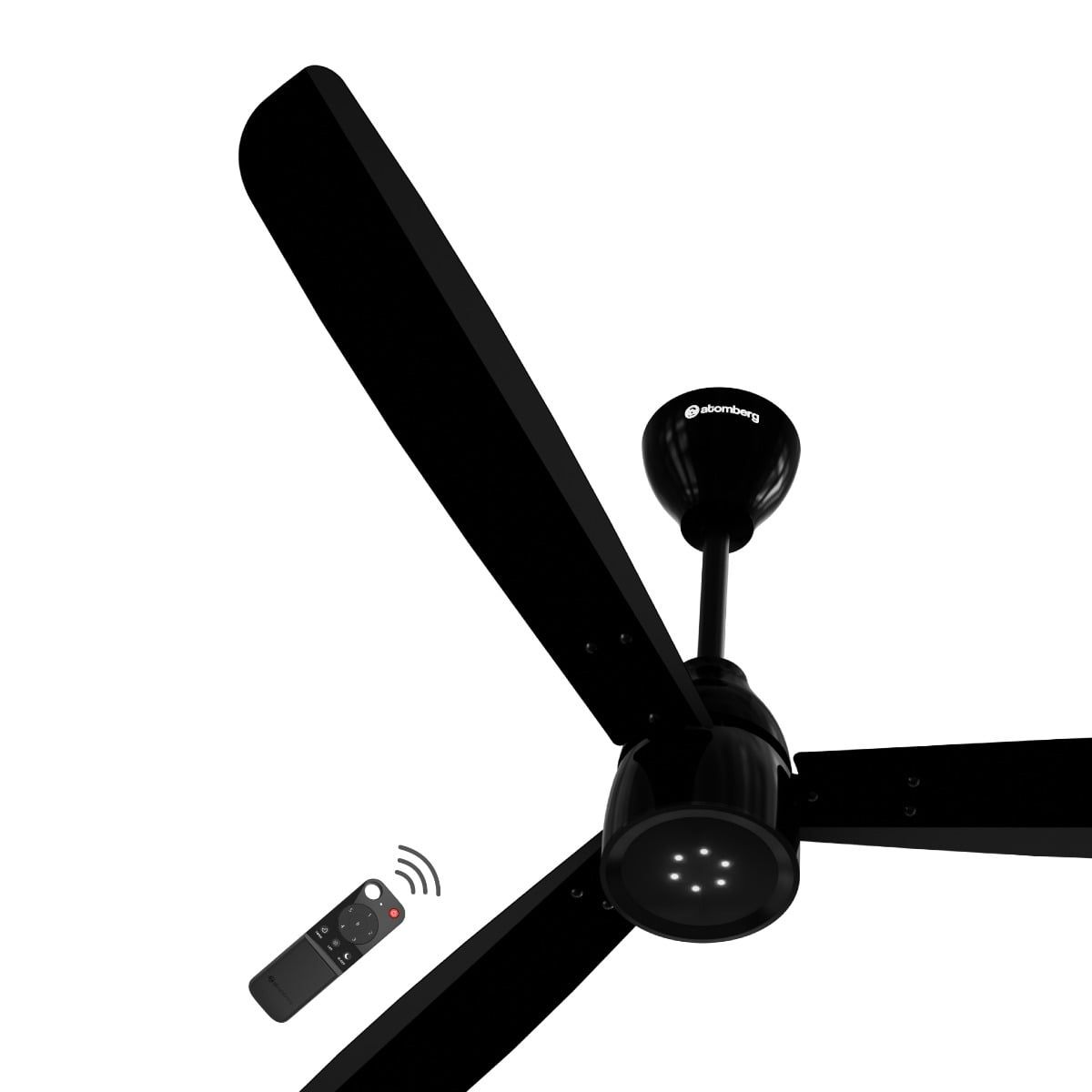
Best overall
Atomberg Renesa Enzel 1200mm BLDC Ceiling Fan with Remote
For bedrooms and inverter homes that run fans most of the day: the lowest draw we measured at 29 W, the most air at 2.4 m/s, the quietest motor at about 47 dB and about 21 hours on a 900 VA inverter. Spares such as the control board are not stocked by local electricians, and the remote can lose pairing after a long power cut.
- Measured 29 W at top speed against a rated 28 W
- About 47 dB at one metre, the quietest fan in this group
- Remote has no backlight and loses pairing after a long power cut on some units
-
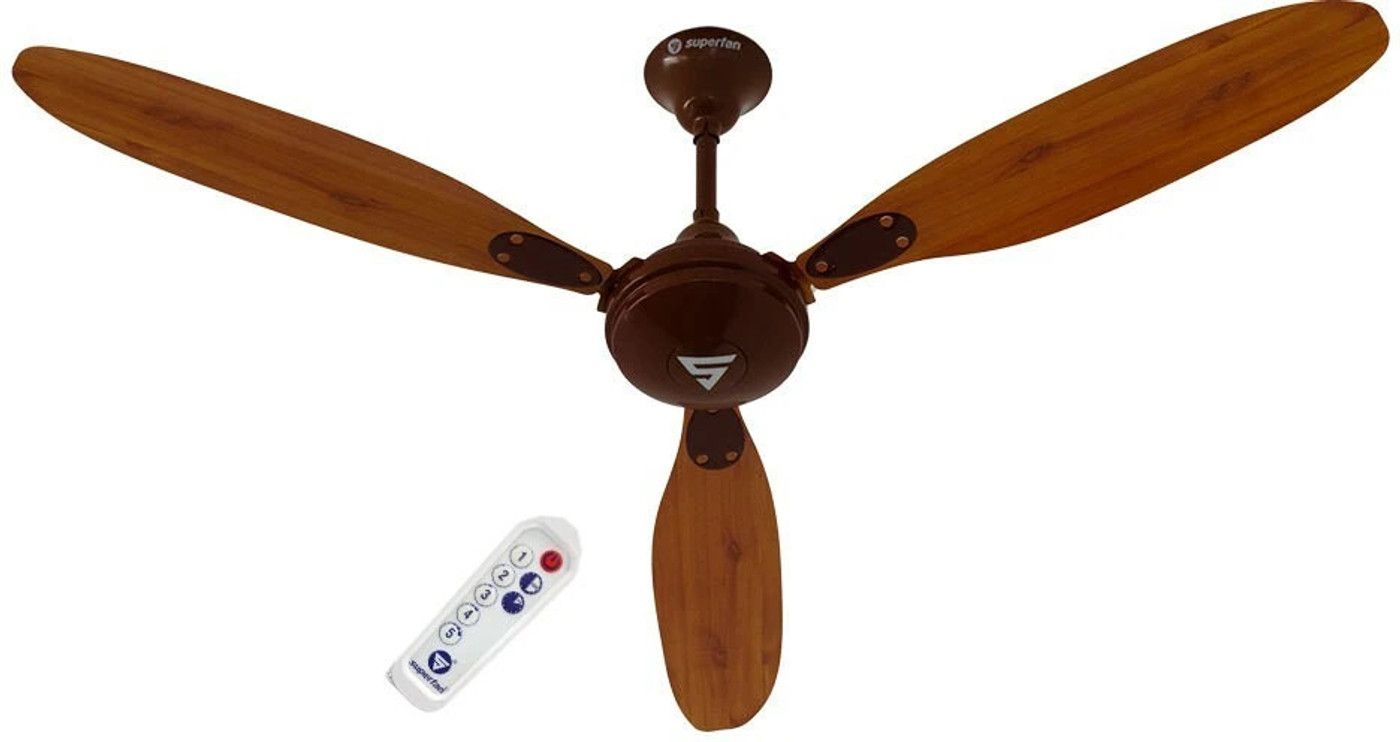
Best value
Superfan Super X1 1200mm BLDC Ceiling Fan with Remote
For anyone replacing several old fans on a budget: 36 W at top speed, 2.3 m/s of air, about 18 hours on a 900 VA inverter and a 5-year warranty listed on the brand page. It is a little louder than the Atomberg and Havells, and Superfan's service network is smaller than the big brands'.
- 5-year warranty as listed on the brand page
- Measured 36 W at top speed
- About 51 dB at one metre at top speed
-
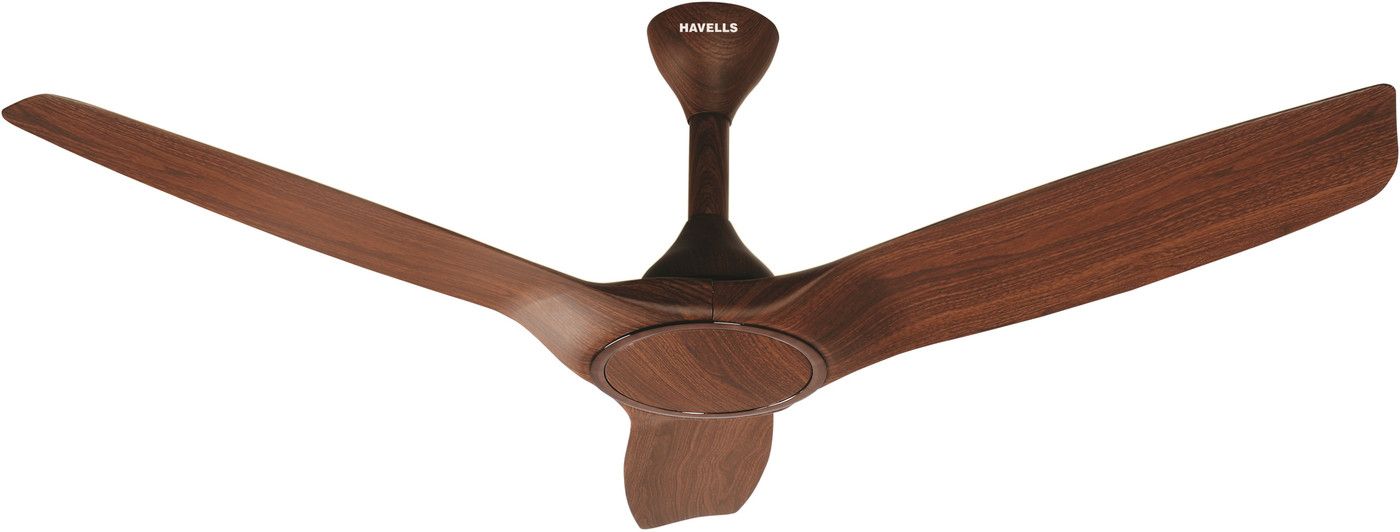
Best premium finish
Havells Stealth Air 1200mm BLDC Ceiling Fan with Remote
For homes where finish and brand matter: a quiet fan at about 49 dB, 2.3 m/s of air, steady from 180 V to 250 V and one of the widest service networks in India. It costs two to three times as much as fans with similar numbers, and its 41 W draw was the highest of the BLDC fans.
- About 49 dB at one metre at top speed
- 2.3 m/s air speed at 1.5 m below
- Draws about 41 W, the highest of the BLDC fans here
-
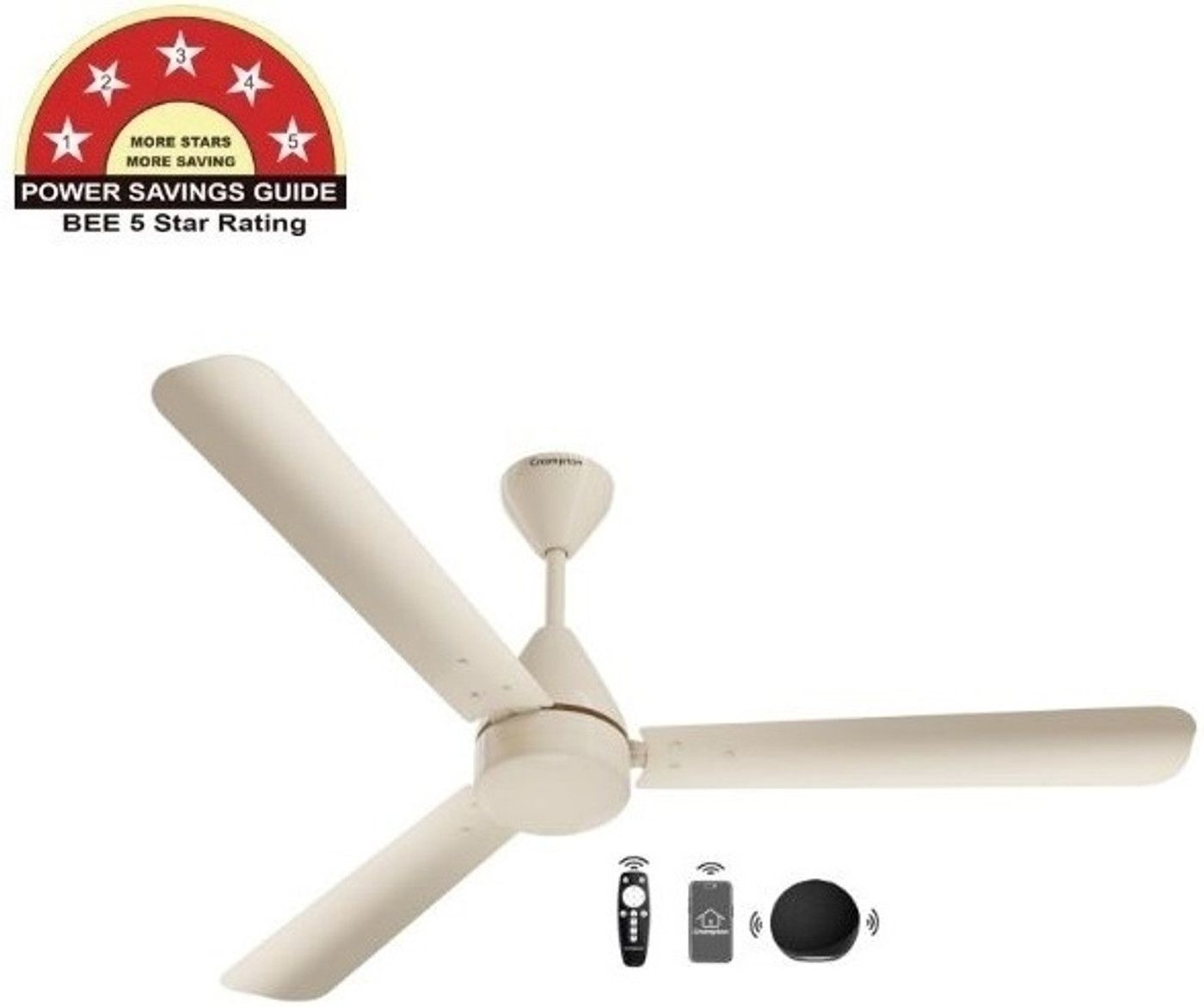
Best for living rooms
Crompton Energion Hyperjet 1200mm BLDC Ceiling Fan with Remote
For halls that need a burst of air on hot afternoons: Hyper mode lifted air speed from 2.2 m/s to about 2.5 m/s, the remote adds a timer and sleep mode, and Crompton service covers most towns. At about 52 dB it is too loud for light sleepers, and some owners report remote and control-board failures.
- 2.2 m/s air speed at 1.5 m below at top speed
- Hyper mode with timer and sleep mode on the remote
- About 52 dB at one metre at top speed
Buying advice
Most Indian homes should buy a 1200 mm BLDC ceiling fan with a remote and a BEE 5 star rating for every room that runs a fan more than a few hours a day. A BLDC fan uses roughly half the power of an old induction fan, runs about twice as long on an inverter and copes better with low voltage. Choose by noise for bedrooms, by service reach in your town, and by warranty, since the remote and control board are the parts most likely to fail.
Is a BLDC fan worth it?
For a fan you run most of the day, yes. A typical induction fan draws about 75 W at top speed; the BLDC fans we test usually draw 30 to 40 W, and far less on the middle speeds where most people sleep. At 12 hours a day, that difference is well over a thousand rupees a year per fan, so the extra purchase price is usually recovered within two or three summers.
An induction fan still makes sense for a store room or a rarely used guest room. It is cheap, needs no electronics and any local electrician can replace a capacitor, bearing or winding.
Will a BLDC fan run longer on an inverter?
Yes, and this is often the bigger reason to switch. With a 900 VA inverter, a 150 Ah battery and two LED bulbs, BLDC fans in our tests ran roughly 17 to 21 hours at top speed, against about 12 hours for an induction fan. On the middle speeds the same battery lasts well past a full night. Look for a fan that restarts on its own after the inverter changeover, so you are not woken up to press the remote.
What size fan for your room?
A 1200 mm sweep suits rooms up to about 150 sq ft, which covers most Indian bedrooms and small halls. For a larger hall, two fans spread the air more evenly than one bigger fan. Hang the blades 8 to 9 feet above the floor; most supplied down-rods suit ceilings up to about 10 feet, so order a longer rod for higher ceilings.
Air speed matters more than the CMM figure on the box. We measure it 1.5 m below the blades, roughly where a person sits or lies, and the spread between fans is small enough that noise and power use usually decide the choice.
How quiet should a bedroom fan be?
At top speed, the quietest fans we have tested sit in the high 40s of decibels at one metre, a soft rush of air; induction fans often reach the high 50s with a clear motor hum. Most people sleep with the fan on a lower speed, where good BLDC fans fall below 40 dB. If you are a light sleeper, also listen for blade flutter and clicking from the remote receiver, and make sure the electrician tightens all blade screws evenly, as wobble adds noise and shortens bearing life.
What happens during voltage drops?
Many homes see voltage fall below 200 V on summer evenings. BLDC fans handle this well: their electronics hold the speed close to normal down to about 190 V and keep running at 180 V. Induction fans slow down sharply and hum louder at low voltage, and can run hot when voltage is high. A stabiliser is not needed for a BLDC fan.
What should you check about warranty and service?
The remote and the control board are the usual failure points on BLDC fans, and local electricians rarely stock these spares. That makes the warranty and the brand’s service reach more important than on an induction fan. Read the warranty card, as motor and electronics are often covered differently, keep the invoice, and call the brand’s helpline before buying if you live outside a big city. Keep a spare battery for the remote: a dead cell is the most common reason people think a BLDC fan has failed.
Questions buyers ask
Is a BLDC ceiling fan worth buying in India?
Yes, for any fan that runs several hours a day. The BLDC fans we tested drew 29 W to 41 W at top speed against 67 W for the Bajaj Speedster X induction fan, which at 12 hours a day and ₹8 a unit costs about ₹1,086 a year more to run than a 36 W BLDC fan.
Which ceiling fan runs longest on an inverter?
The Atomberg Renesa Enzel ran about 21 hours at top speed on a 900 VA inverter with a 150 Ah battery and two LED bulbs. Most other BLDC fans we tested ran 17 to 18 hours on the same setup, and the Bajaj Speedster X induction fan about 12 hours.
Which is the quietest ceiling fan?
The Atomberg Renesa Enzel was the quietest ceiling fan we tested, at about 47 dB at one metre on top speed, followed by the Havells Stealth Air at about 49 dB. The Bajaj Speedster X induction fan was the loudest at about 58 dB.
Do BLDC fans work on low voltage?
Every BLDC fan we tested kept running at 180 V. The Atomberg, Havells, Superfan, Crompton, Orient and Usha slowed only slightly, while the Polycab Silencio Mini slowed noticeably. The Bajaj Speedster X induction fan slowed by about a third and hummed louder.
Can I use my old wall regulator with a BLDC fan?
No. A BLDC fan such as the Orient Aeroquiet or Atomberg Renesa Enzel is controlled by its remote, so remove the old wall regulator or set it to maximum. Only induction fans like the Bajaj Speedster X need a regulator.